Shelf Ready Packaging: Complete UK Guide to SRP Boxes, Design and Retail Use
October 01, 2026
Shelf ready packaging helps products move from transport packaging to the retail shelf with less unpacking, while keeping them protected, organised and clearly presented.
Often shortened to SRP, shelf ready packaging usually holds several individual products inside an outer pack that can be opened or converted into an in-store merchandising unit. Rather than removing every product from a shipping case and arranging each one separately, retail staff can place the prepared pack directly onto the shelf.
The concept is particularly useful for supermarkets, convenience stores and other fast-moving retail environments where efficient shelf replenishment matters. FEFCO, the European Federation of Corrugated Board Manufacturers, describes corrugated SRP as a way to make shelf replenishment faster while also providing space for effective brand communication.
For brands, however, good shelf ready packaging design is about more than making stocking easier. The pack has to work through transport, storage, handling, opening, merchandising and finally the shopper's interaction with the product.
This guide explains what shelf ready packaging is, how it works, the main types available, how it differs from retail ready packaging, what materials and design features matter, and what UK businesses should consider before ordering custom shelf ready packaging.
Guide to SRP Boxes, Design and Retail Use
What Is Shelf Ready Packaging?
Shelf ready packaging is secondary packaging designed to transport multiple products and allow them to be moved onto a retail shelf with minimal unpacking or rearrangement.
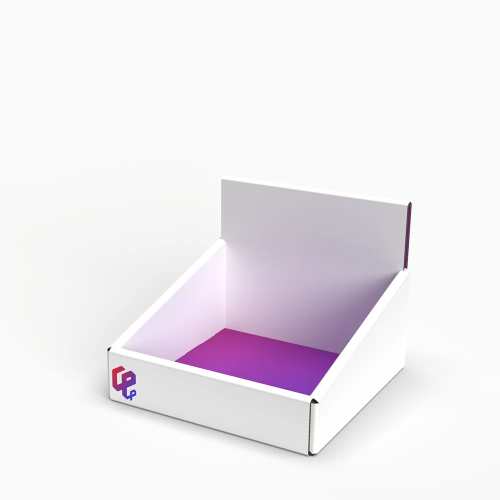
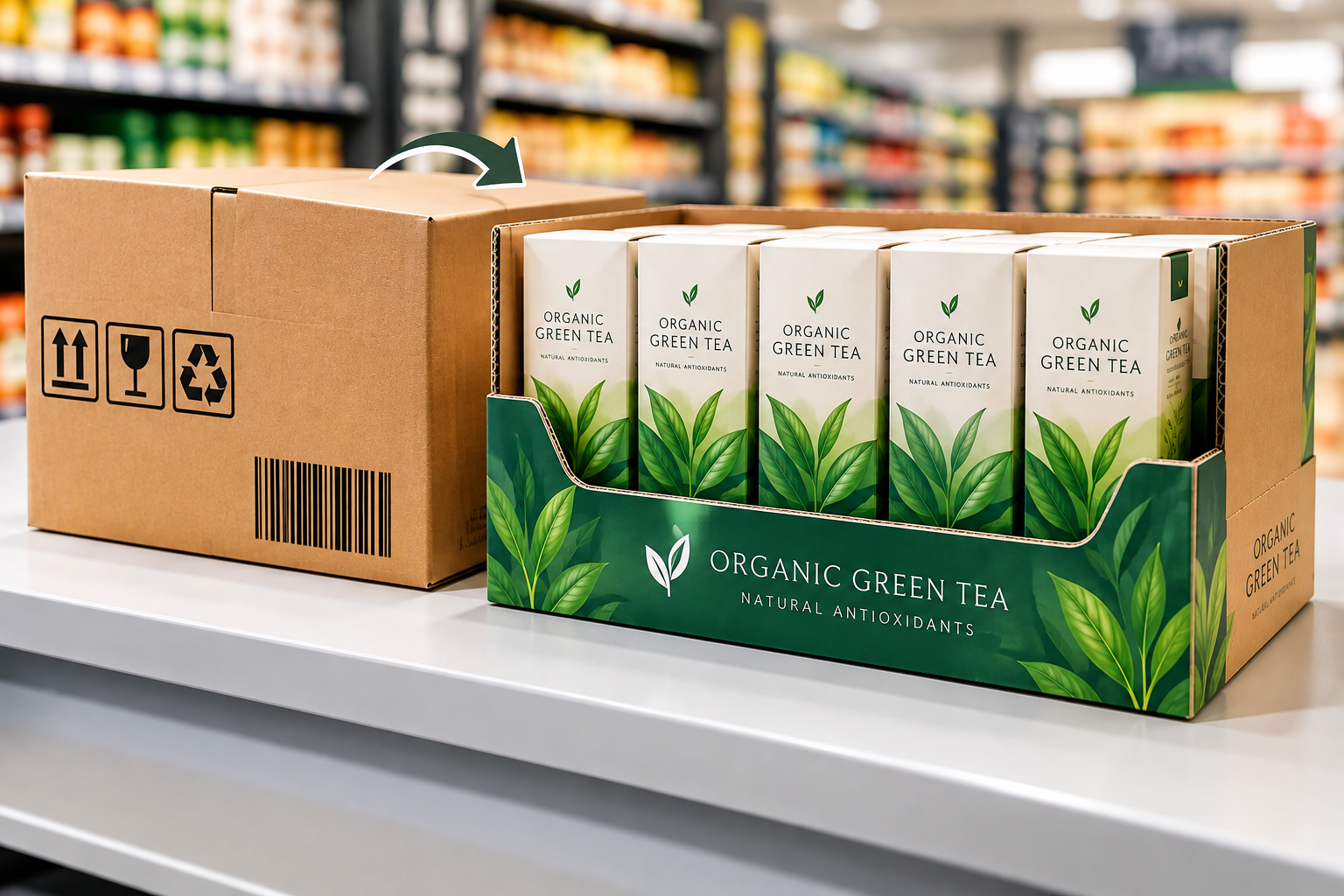
A typical shelf ready pack starts as a protective outer case. Once it reaches the shop, staff remove a lid, tear away a perforated section or open another purpose-designed part of the box. What remains becomes a tray or display that holds the individual products in an organised position.
The Cardboard Box Company defines SRP as an outer transit box containing goods that are ready for sale and delivered to the retailer as a merchandising unit that can go directly onto the shelf.
This explains the basic SRP meaning in packaging. It combines functions that would otherwise require separate transport and display solutions:
- holding several individual products together
- protecting products during distribution
- helping retail employees identify the contents
- making the case straightforward to open
- allowing rapid shelf replenishment
- keeping individual products organised
- providing visible surfaces for branding and product information
- making the remaining packaging easier to remove when stock is sold
SRP can therefore sit between conventional transit packaging and dedicated display packaging.
How Does Shelf Ready Packaging Work?
The process normally starts long before a product reaches the shop.
Individual products are packed into the SRP case at the production or packing stage. The complete case then travels through the supply chain while protecting the contents.
When it arrives in store, staff identify the case, open its designated tear section and place the resulting unit onto the shelf.
A well-designed pack should allow this to happen without damaging the products or creating unnecessary pieces of packaging.
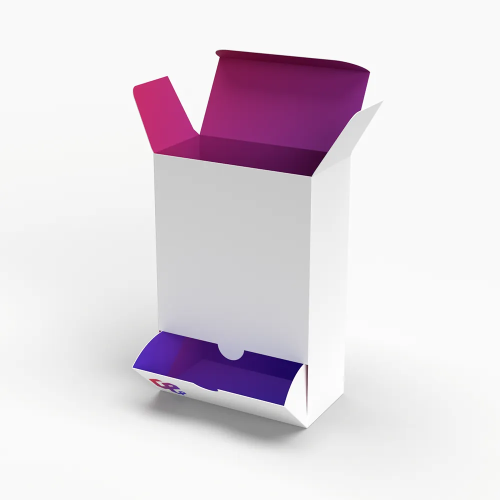
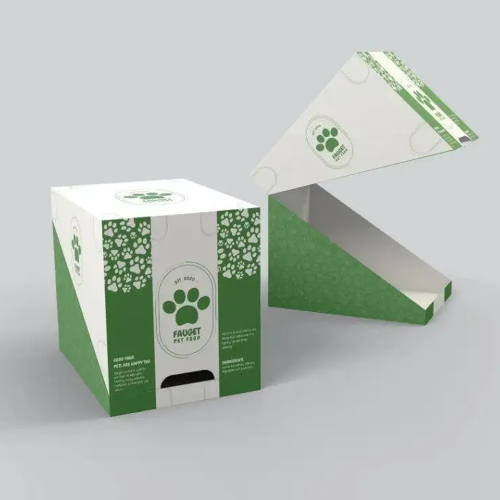
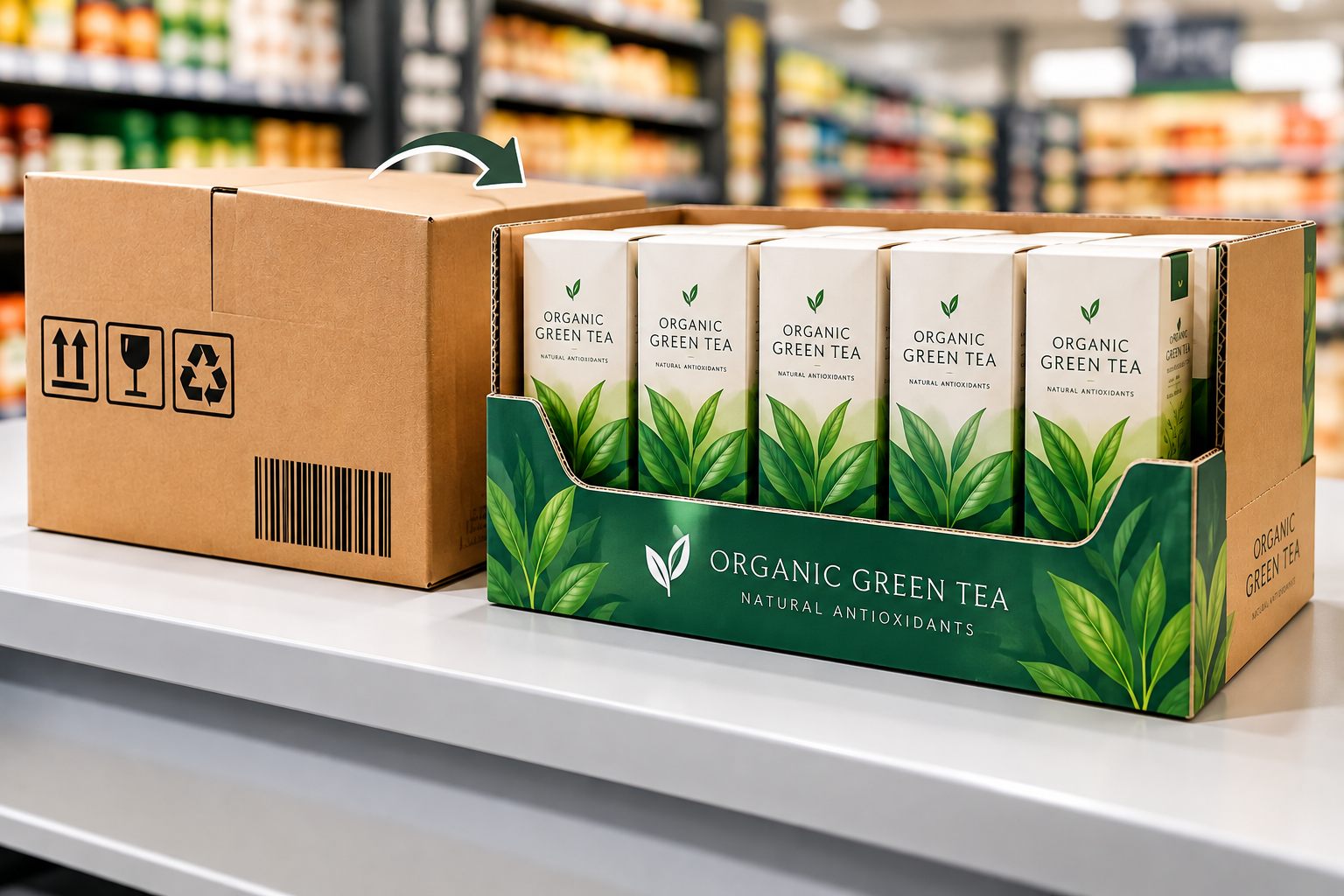
For example, an SRP box may have a perforated upper section. During transportation, the complete corrugated structure provides support around the products. In store, the upper panel is removed along the perforation. The lower section remains as a branded display tray.
Atlas describes one of its shelf-ready structures as a corrugated box with a detachable perforated top that arrives pre-glued and folded, then can be filled on the packing line and placed directly onto a shelf after opening.
Not every SRP box uses the same construction, which is why product size, weight, shelf dimensions and retailer requirements should be considered before creating the final structure.
The Five Easies of Shelf Ready Packaging
One of the most useful ways to evaluate retail shelf ready packaging is the industry framework commonly known as the Five Easies.
FEFCO describes five attributes for efficient in-store handling: easy to identify, easy to open, easy to place on shelf, easy for shoppers to access and easy to flatten and recycle.
1. Easy to identify
Retail staff should be able to tell what is inside a case without opening it unnecessarily.
Useful identification information can include:
- product name
- brand
- product variant
- flavour or colour
- pack quantity
- SKU or barcode information
- clear visual coding
Good identification becomes particularly important in stockrooms containing similar cases.
2. Easy to open
Opening an SRP case should be simple and controlled.
Common features include:
- perforated panels
- tear strips
- tear-away lids
- removable tops
- clearly marked opening points
The opening method also needs to preserve the section of the box that remains on the shelf.
Poorly positioned perforations can tear into visible graphics, leave rough edges or weaken the display tray. The structural design and print artwork therefore need to be planned together.
3. Easy to replenish
The opened pack should be straightforward to move from the stockroom to its intended position.
FEFCO notes that shelf replenishment should ideally take place in one movement while keeping the contents secure.
Pack dimensions become especially important here. A visually impressive display provides little practical value if it does not fit the allocated shelf space.
4. Easy to shop
Once the SRP is on display, customers still need to see, identify and remove individual products easily.
The front walls should not hide important parts of the primary packaging. Products should remain adequately supported as units are removed.
This creates a structural balancing act. The tray needs enough material to hold the remaining products securely, but not so much that it blocks product visibility.
5. Easy to dispose of
After the final products have been sold, shop staff should be able to remove and handle the empty packaging efficiently.
Corrugated structures can often be flattened, which can make storage and collection easier. Material choice and any coatings, laminates, windows, tapes or other components should still be assessed rather than assuming every cardboard-based design has identical recycling characteristics.
For UK businesses, recyclability is increasingly relevant to packaging compliance as well as sustainability goals. Government guidance for 2026 lists corrugated cardboard among packaging formats commonly collected at kerbside for recycling across the UK.
Benefits of Shelf Ready Packaging
The best SRP designs solve problems for manufacturers, retailers and shoppers at the same time.
Faster shelf replenishment
This is one of the main reasons shelf ready packaging exists.
Instead of opening a conventional shipping carton and arranging every individual product, employees can open the SRP case and move the complete unit onto the shelf.
Both FEFCO and major packaging manufacturers describe simplified replenishment as a central purpose of SRP.
The potential value is greatest for products that move quickly and require frequent restocking.
Protection during transport
Shelf-ready does not mean protection should be sacrificed for appearance.
Before becoming a retail display, the box still needs to survive the relevant supply chain.
That may involve:
- packing operations
- stacking
- palletisation
- warehouse storage
- distribution
- manual handling
- transport vibration
- movement through retail stockrooms
The required board grade and structure should therefore be selected around the actual product and distribution environment.
For heavier products, greater compression resistance or stronger corrugated construction may be required. Light products can potentially use a different material specification.
For more demanding transport requirements, businesses can also compare SRP with dedicated corrugated shipping boxes.
Better product organisation
A well-designed tray keeps individual items grouped and facing in a consistent direction.
This can improve the overall appearance of the retail shelf and reduce loose products spreading into neighbouring shelf space.
It is particularly helpful for smaller items such as:
- snack products
- confectionery
- cosmetics
- health products
- small household goods
- sachets
- bottles
- cans
- jars
- boxed products
More visible branding
Unlike a transport box that disappears into the stockroom, parts of shelf ready packaging remain visible beside the product.
Those surfaces can carry:
- brand colours
- logos
- product names
- variant information
- category cues
- promotional messaging
- usage information
Shelf-ready packaging should not compete visually with the primary product pack. The two should work together as one retail presentation.
Businesses looking specifically at display-led structures can also consider custom display packaging boxes.
Better use of retail shelf space
The number of products per case, box width, depth, height and front-wall design can all affect how efficiently the allocated space is used.
This is one reason generic packaging is not always suitable for SRP applications.
Custom dimensions can help match the packaging more closely to:
- the product footprint
- units per case
- shelf depth
- shelf height
- facings required
- product orientation
The ideal configuration depends on the specific retailer and product.
Types of Shelf Ready Packaging
There is no single structure that works for every product. Different types of shelf ready packaging solve different merchandising and protection requirements.
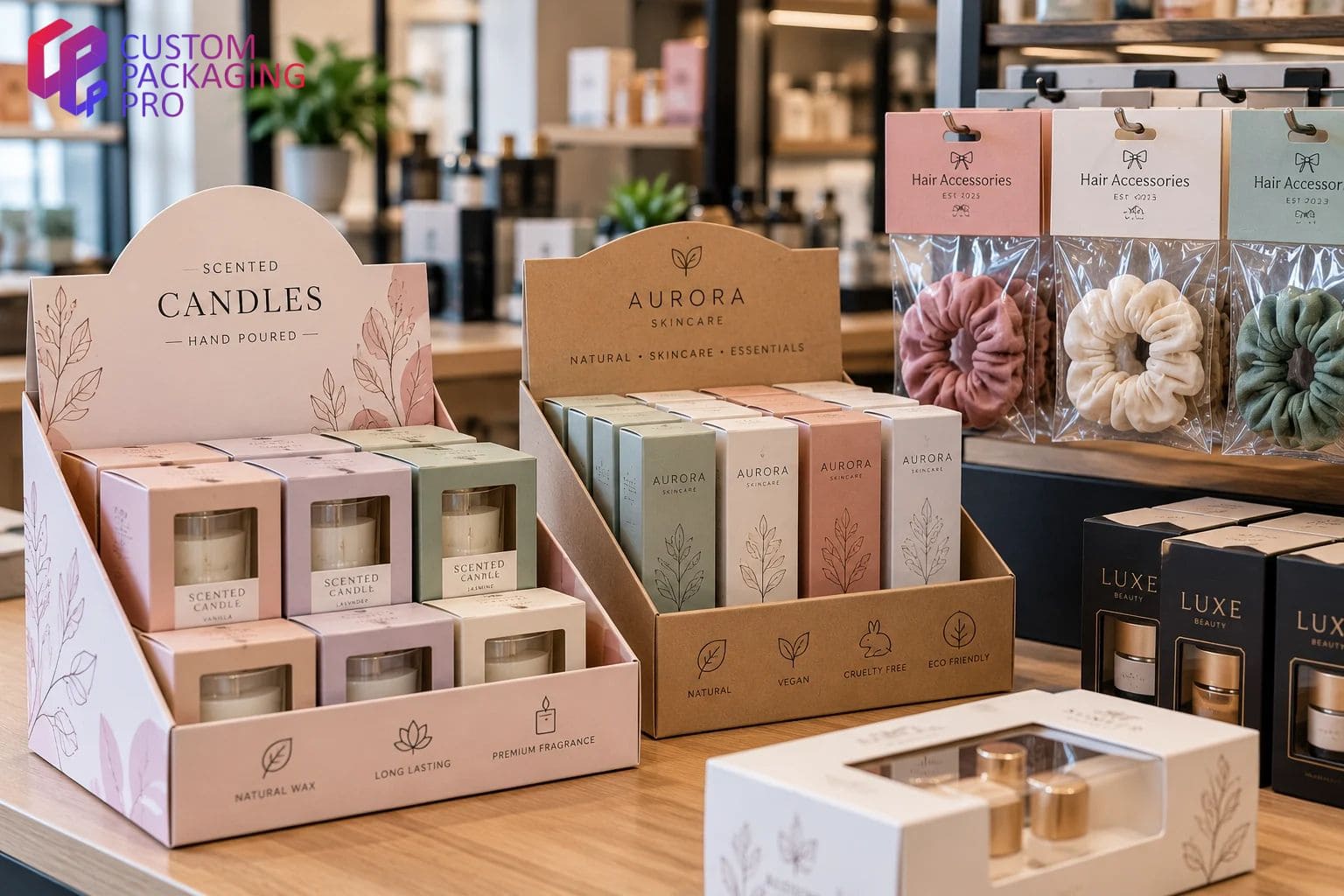
Tray and removable lid boxes
This is one of the most recognisable SRP formats.
Products sit in a lower tray while an upper cover or surrounding section protects them in transit. Retail staff remove the top section and place the remaining tray on the shelf.
This style can provide a good balance between transit protection and open product visibility.
Perforated shelf ready packaging boxes
A perforated case looks more like a conventional shipping box during transport.
A predefined section is torn away in store to expose the products.
Perforation design needs to be carefully tested. It must be easy enough for staff to open but strong enough to remain intact through manufacturing, packing, stacking and transportation.
Shelf ready display boxes
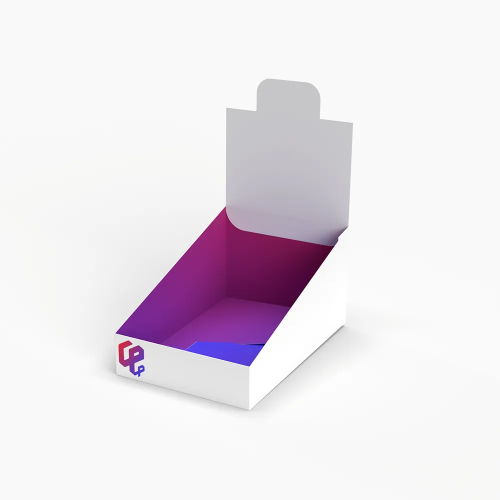
Some designs use a taller back or side panels to create more visible branding space after opening.
They can be useful where the secondary pack needs to contribute strongly to the in-store display.
Depending on the application, businesses may also compare these with cardboard display boxes.
Open-front trays
These structures provide immediate visibility and accessibility while retaining enough surrounding board to keep products grouped.
They can work particularly well for primary packs that already provide much of their own protection.
Wraparound SRP
Wraparound corrugated structures can closely fit a group of products, helping reduce unnecessary space.
The exact suitability depends on packing-line requirements, product stability and the way the case needs to open at retail level.
Custom shelf ready packaging
Products with unusual dimensions, premium positioning or specific retailer requirements may require a completely bespoke structure.
Customisation can include:
- exact dimensions
- board grade
- wall construction
- opening mechanism
- tear strips
- perforations
- locking tabs
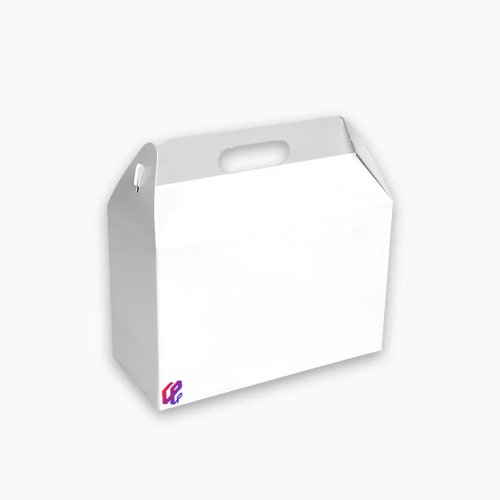
- hand holes
- printed graphics
- internal dividers
- tray height
- display-facing area
Custom SRP is particularly valuable when the product does not fit an existing case efficiently or when shelf presentation is strategically important.
Shelf Ready Packaging vs Retail Ready Packaging
The terms shelf ready packaging and retail ready packaging are often used interchangeably in the packaging industry, but they can also describe slightly different scopes.
Lesters describes SRP as also being known as retail ready packaging.
Smurfit Kappa makes a more specific distinction. Its UK guidance says SRP primarily considers shelf replenishment, while retail ready packaging takes a broader approach that also considers the supply chain and shopper interaction.
For buyers, it is usually more useful to focus on the required function than the abbreviation.
| Requirement |
Shelf Ready Packaging |
Retail Ready Packaging |
| Protect products before sale |
Yes |
Yes |
| Simplify retail handling |
Yes |
Yes |
| Direct shelf replenishment |
Core focus |
Often included |
| Acts as shelf display |
Usually |
Often |
| Broader retail handling requirements |
Can include them |
Usually broader in scope |
| Shopper-facing design |
Important |
Important |
| Custom branding |
Available |
Available |
When requesting quotations, describe exactly how the packaging needs to move through your supply chain and be used in store. This prevents terminology differences between suppliers from causing specification problems.
Why Corrugated Cardboard Is Commonly Used for SRP
Cardboard shelf ready packaging, particularly corrugated board, is widely used because a correctly specified structure can combine protection, printability, relatively low pack weight and structural flexibility.
FEFCO specifically discusses corrugated board in relation to the Five Easies and efficient retail handling.
Corrugated material can be engineered into:
- trays
- cases
- die-cut structures
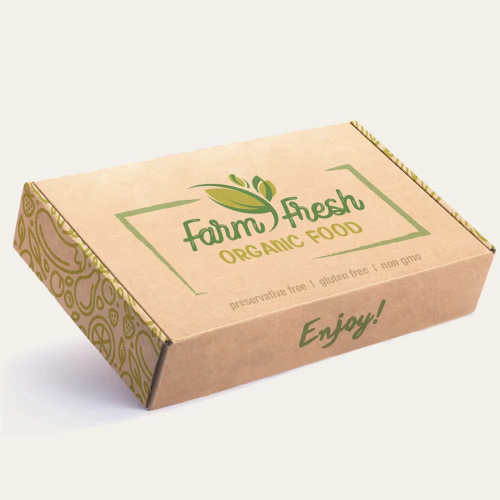
- tear-open boxes
- wraparound packs
- display units
- partitioned packs
However, "cardboard" is a broad term.
Shelf ready packaging may also use paperboard or solid board depending on the product and structural requirements. Smurfit Kappa lists corrugated cardboard, solid board and folding carton board among materials available for SRP solutions.
Material should therefore be selected according to performance rather than appearance alone.
What Makes a Good Shelf Ready Packaging Design?
An attractive graphic design cannot compensate for a box that is frustrating to open or unstable on the shelf.
Good shelf ready packaging design starts with structural requirements.
Match the pack to the product
The designer should know:
- individual product dimensions
- product weight
- number of units per case
- orientation inside the box
- fragility
- centre of gravity where relevant
- whether products can support stacking loads
- required shelf arrangement
Too much empty space can allow unnecessary movement. Too little clearance can make products difficult to insert or remove.
Design around the retail shelf
Before approving a structure, confirm:
- available shelf width
- available shelf depth
- available height
- desired number of product facings
- loading direction
- product removal direction
- whether the retailer has specific SRP requirements
An extra few millimetres can matter when multiple packs need to sit side by side.
Protect the front-facing presentation
After the tear-away section is removed, visible edges should look deliberate.
The remaining tray should not cover:
- the main product name
- important primary-pack branding
- legally required information on the product itself
- key product differentiation
Position perforations carefully
Perforations should support quick opening without making the pack vulnerable during transit.
Their position affects both strength and appearance.
A cut line passing through an important logo or message can also weaken the visual design after opening.
Keep opening instructions obvious
A simple visual cue can make the box easier for store staff to handle correctly.
Instructions can identify:
- where to start
- which direction to tear
- which section to remove
- whether tabs need releasing first
This directly supports the "easy to open" principle described by FEFCO.
Think about the pack after several products are sold
A full SRP tray may look stable during design approval.
The real test comes later.
As shoppers remove products, the remaining items should continue to stand, face forward and remain accessible. The front and side walls therefore need to be designed around both a full and partially empty tray.
Shelf Ready Packaging Dielines and Artwork
A shelf ready packaging dieline is the flat technical layout used to show where the packaging will be cut, creased, folded and, where applicable, perforated or glued.
Artwork is then positioned around that structure.
For SRP, the dieline deserves extra attention because the pack has two visual states:
- the closed transit pack
- the opened retail display
A graphic that looks correct on the closed box can become incomplete once a tear-away panel is removed.
Artwork should therefore be reviewed in both states.
Important checks include:
- logo positioning
- front-panel visibility
- tear-line placement
- barcode location
- text orientation
- product variant identification
- safe print areas
- folds and creases
- glue areas
- areas removed in store
Physical prototypes or production-equivalent samples can also reveal issues that are difficult to judge from a flat digital layout.
If your business needs help preparing the structural concept and artwork, Custom Packaging Pro also provides a packaging design service.
Printing Shelf Ready Packaging
Printing can turn the visible tray into an extension of the primary product packaging.
Common approaches in the corrugated sector include flexographic, pre-print and lithographic methods. Smurfit Kappa lists flexo post-print, pre-print and litho among printing options for its SRP solutions.
The appropriate process depends on factors such as:
- order quantity
- board type
- artwork complexity
- colour requirements
- desired image quality
- budget
- finishing requirements
The strongest retail design is not necessarily the one with the most graphics.
Clear branding and product recognition usually matter more than filling every printable area.
Consider how the design will look from normal shopping distance, not just when viewed closely on a monitor.
Shelf Ready Packaging Examples by Product Type
Different products create different SRP requirements.
| Product category |
Possible SRP approach |
Main design priority |
| Snack bars |
Printed corrugated tray |
Easy access and clear brand blocking |
| Bottled drinks |
Strong tray or case-to-shelf structure |
Weight support and stability |
| Canned products |
Corrugated tray or wraparound case |
Pack strength and efficient replenishment |
| Cosmetics |
Printed display-ready box |
Presentation and product visibility |
| Health products |
Compact display tray |
Organisation and variant identification |
| Household goods |
Corrugated shelf-ready case |
Durability and shelf efficiency |
| Confectionery |
Branded display tray |
Accessibility and visual impact |
| Small boxed goods |
Tear-open SRP case |
Fast replenishment and neat arrangement |
These are examples rather than fixed rules. The final construction should reflect the actual product, supply chain and retailer specification.
How to Choose Shelf Ready Packaging Suppliers
Price per box is only one part of choosing between shelf ready packaging suppliers.
A supplier should be able to translate a product and retail requirement into packaging that works physically, not simply print graphics onto an existing box.
Before ordering, discuss the following.
Product specifications
Provide accurate:
- length, width and height
- unit weight
- quantity per case
- total loaded weight
- product material or fragility information where relevant
Retail requirements
If a retailer has issued packaging guidelines, give them to the packaging designer before structural work begins.
Do not assume all supermarket or retail shelving systems use identical requirements.
Distribution conditions
Explain how the boxes will be:
- filled
- sealed
- stacked
- palletised
- stored
- transported
- opened
- displayed
Packaging that works for a short local delivery may require a different specification for a more demanding distribution chain.
Printing requirements
Provide brand guidelines, artwork expectations, colours and any information that must remain visible after the case is opened.
Required quantity
Production volume can affect manufacturing methods, unit economics and suitable print processes.
Businesses comparing shelf ready packaging wholesale options should ask suppliers to quote against the same specification so prices can be compared fairly.
Testing and samples
For a new SRP design, ask what sampling or testing process is available before committing to a large production run.
A physical sample can help check fit, opening, shelf presentation and product accessibility.
Questions to Ask Before Ordering Custom Shelf Ready Packaging
Use this checklist when preparing a packaging brief:
- What exact product will the box contain?
- What are the dimensions and weight of each unit?
- How many products must each SRP case hold?
- What is the complete loaded case weight?
- How will products be arranged?
- What shelf dimensions must the case fit?
- Does the retailer provide an SRP specification?
- How should the case be opened?
- Which parts of the packaging remain visible?
- Which branding elements must remain visible after opening?
- Does the structure need hand holes or carrying features?
- Will the packaging be erected manually or automatically?
- How will it move through the packing line?
- What distribution conditions will it face?
- What print quality is required?
- What quantity is needed?
- What recycling or material requirements apply?
- Has the design been tested with the actual product?
Answering these questions before production can prevent expensive structural changes later.
Shelf Ready Packaging and Sustainability in the UK
Reducing material is useful only when the resulting pack still performs its job.
If lightweighting causes damage, collapsing trays or product waste, the design has not necessarily become more sustainable.
A more practical approach is to consider:
- right-sized dimensions
- appropriate board strength
- unnecessary material components
- ease of separation
- recyclability
- transport efficiency
- product protection
- packing efficiency
For UK organisations, packaging decisions can also interact with Extended Producer Responsibility for packaging (EPR).
As of the 2026 reporting framework, GOV.UK states that businesses supplying or importing packaging may have EPR obligations depending on factors including turnover, packaging tonnage and their role in the packaging supply chain. Large producers are generally organisations with annual turnover above £2 million that are responsible for supplying more than 50 tonnes of packaging in the UK.
Large producers supplying household packaging also have recyclability assessment requirements under the UK's Recyclability Assessment Methodology. The current government guidance uses red, amber and green assessments, with recyclability ratings influencing relevant waste disposal fees.
Businesses should check the current official guidance for their circumstances rather than assuming that choosing cardboard automatically satisfies every regulatory requirement.
For businesses prioritising paper-based solutions, our eco-friendly boxes category provides additional packaging options.
Common Shelf Ready Packaging Design Mistakes
- Making the tear section too difficult to open
If store staff need excessive force or tools, one of the main purposes of SRP has been undermined.
- Making perforations too weak
The opposite problem is equally serious. A tear section that opens accidentally during transport can compromise protection and presentation.
- Ignoring loaded weight
A structure that appears strong when empty may behave differently once filled, stacked and transported.
- Designing graphics only for the closed box
Remember that part of the artwork may be removed in store. The remaining tray is the version shoppers will actually see.
- Hiding too much of the product
A high front wall can provide support but reduce product visibility and accessibility.
- Forgetting retailer specifications
A structurally sound box may still be unsuitable if it does not match the retailer's shelf, handling or merchandising requirements.
- Using unnecessary empty space
Oversized packaging can reduce pallet, warehouse and shelf efficiency.
- Treating SRP as only a display box
Shelf presentation matters, but the packaging still has to perform before it reaches the shelf. Protection, packing and distribution should be designed into the structure from the beginning.
Is Shelf Ready Packaging Right for Your Product?
SRP is particularly worth considering when your product:
- is sold through physical retail stores
- is supplied in multiple units per case
- requires regular shelf replenishment
- benefits from organised product presentation
- needs additional branded shelf presence
- can be displayed in the secondary pack
- needs protection through a retail distribution chain
It may be less relevant where products are individually placed, sold primarily online, displayed through another permanent fixture or supplied in very low volumes without a repeatable retail configuration.
For wider retail packaging options, businesses can also review custom retail boxes and product display boxes.
Creating Custom Shelf Ready Packaging for UK Retail
The most effective custom shelf ready packaging is designed backwards from the real shelf and supply chain.
Start with the product, not the box.
Define its dimensions, weight, case quantity and retail position. Then establish how the packaging will be filled, transported, opened and replenished.
From there, structural design can determine:
- suitable board
- overall dimensions
- tray height
- opening method
- perforation positions
- strength requirements
- visible print areas
- product accessibility
Graphic design should come after the functional structure is understood.
This approach creates packaging that does more than look attractive in a mockup. It has a practical job throughout the product journey.
Custom Packaging Pro works with UK businesses, retailers and product brands on packaging built around product protection, professional presentation and brand identity.
For retail products requiring a stronger in-store presence, businesses can compare display packaging, stand-up displays, corrugated display boxes and other custom printed packaging formats before selecting the final structure.
Final Considerations
Shelf ready packaging works best when transport protection, retail efficiency and product presentation are treated as one design problem.
A strong SRP box should reach the retailer intact, be immediately identifiable, open cleanly, fit the allocated shelf, keep products organised, make shopping straightforward and be practical to handle after use.
For UK brands, that means looking beyond surface graphics. Product weight, case quantity, board specification, shelf dimensions, structural strength, perforations, print artwork, packing-line requirements, retailer specifications and recyclability all deserve attention before production begins.
When those elements are considered together, shelf ready packaging becomes more than an outer box. It becomes part of the product's journey from packing line to retail shelf, while giving the brand another opportunity to present products consistently and professionally.

Frequently Asked Questions About Shelf Ready Packaging
- What does shelf ready mean?
Shelf ready means packaging has been designed so a retailer can prepare and place the product onto the sales shelf with minimal additional handling. For SRP, this often means opening or removing part of an outer transport case and placing the remaining tray containing the products directly onto the shelf.
- What does SRP mean in packaging?
SRP means shelf ready packaging. It generally refers to secondary packaging that protects multiple products during distribution and then functions as a merchandising or display unit in store.
- What are shelf ready packaging boxes?
Shelf ready packaging boxes are outer packs designed to carry products through the supply chain and simplify their placement on retail shelves. They may use removable lids, perforated panels, tear strips or tray structures depending on the product.
- What is the difference between shelf ready packaging and retail ready packaging?
The terms are frequently used interchangeably. Where a distinction is made, shelf ready packaging tends to focus specifically on easy shelf replenishment, while retail ready packaging can refer more broadly to packaging designed around retail supply-chain, handling, merchandising and shopper requirements.
- What material is used for shelf ready packaging?
Corrugated cardboard is widely used for SRP, but it is not the only option. Depending on the application, manufacturers may also use solid board or folding carton board. The appropriate material depends on product weight, protection needs, structure, print requirements and retail conditions.
- Is shelf ready packaging recyclable?
Many paper and corrugated SRP formats can be designed for recycling, but recyclability depends on the complete packaging construction rather than the word "cardboard" alone. Coatings, laminates, adhesives and additional components may affect the assessment. UK businesses subject to EPR should refer to current PackUK and government recyclability guidance for their specific packaging.
- What are the Five Easies of SRP?
The Five Easies are a framework used to evaluate whether shelf ready packaging is: easy to identify, easy to open, easy to replenish, easy to shop, easy to dispose of. FEFCO describes these as key attributes for efficient in-store handling of corrugated shelf ready packaging.
- Can shelf ready packaging be custom printed?
Yes. Corrugated and board-based SRP can be printed using different processes depending on the material, run length and desired print quality. Branding should be planned around the final opened display as well as the closed transit case.
- What products are suitable for shelf ready packaging?
SRP can be used for many retail products, including food, beverages, cosmetics, personal care products, health products, household products and other fast-moving consumer goods. Suitability depends less on the product category than on how the item is distributed, stocked and displayed.
- What information does a shelf ready packaging supplier need?
At minimum, expect to provide product dimensions, weight, units per case, quantity required, artwork requirements and information about how the packaging will be transported and displayed. Retailer shelf or packaging specifications should also be supplied where available.
- Can shelf ready packaging reduce shelf-stocking work?
Its structure is specifically intended to simplify shelf replenishment by allowing multiple products to move from case to shelf together rather than being individually unpacked and arranged. FEFCO identifies easier and faster shelf replenishment as a core function of corrugated SRP.