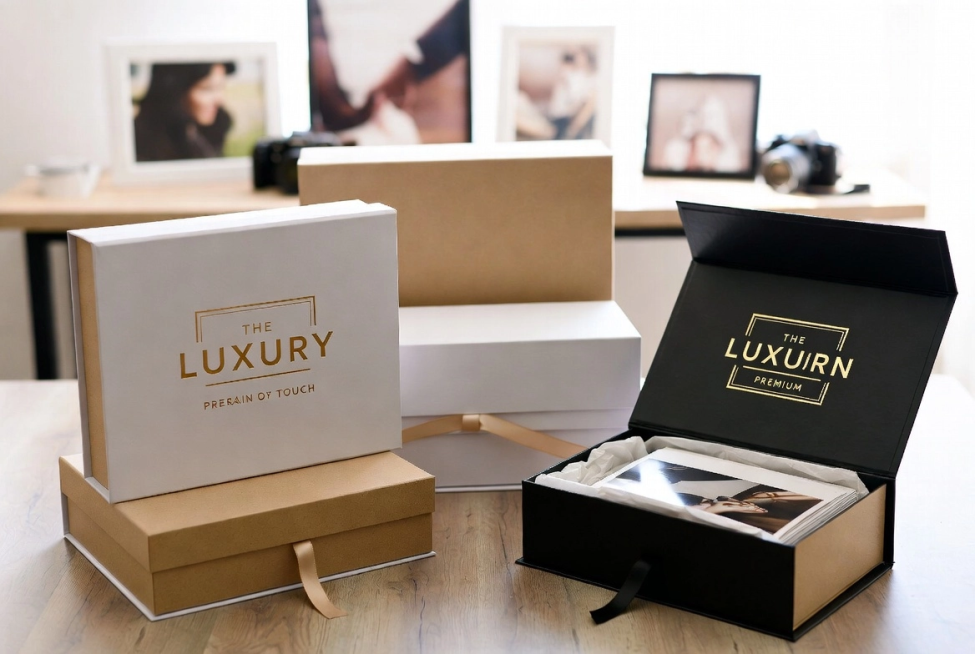
Photograph Storage Boxes: Protect, Present & Store with Style
May 21, 2026
The packaging ecosystem across the photography and print industry is undergoing a major shift in how physical media is protected, presented, and preserved. Photographs don’t fade solely on their own over time—poor, non-archival storage does it for them. A print that survives the shoot, the edit, and the lab can still end up yellowed, warped, or scratched because it was kept in a flimsy shoebox under a bed or stacked loose in a storage drawer.
For photographers or fine art print businesses handing work over to clients, low-quality corrugated boxes or generic mailers send an unintended signal about your overall brand quality. Poor packaging erodes perceived image quality before a client even views their prints.
Well-chosen custom photograph storage boxes solve both protection and presentation challenges simultaneously. They keep prints physically safe for decades while framing commercial handovers in a way that reflects premium craftsmanship. Whether you are a wedding photographer finalizing high-end print packages, an online retailer shipping art orders, or a family archivist sorting decades of memories, choosing the correct box structure is critical.
Why Proper Photo Storage Architecture Is Mandatory
What are the main risks of poor photo storage, and how do custom boxes prevent damage?
Direct Answer: Standard non-archival cardboard contains acidic lignins that migrate into prints, causing yellowing, staining, and chemical degradation over time. Proper photograph storage boxes engineered from 100% acid-free paperboard with secure lids prevent atmospheric moisture absorption, protect against UV color fading, and eliminate surface abrasion during long-term storage or postal transit.
It is easy to underestimate what substandard storage actually does to a photograph over time. The damage accumulates gradually through invisible environmental factors. Ambient atmospheric moisture slowly warps paper fibers from the inside out. Standard industrial cardstocks off-gas acidic elements that migrate into the print substrate, creating irreversible yellow stains.
When unmounted photos are stacked without tissue interleaving, routine surface friction causes micro-scratches that dull image clarity. Even indirect ambient light filtering through loosely fitted lids gradually breaks down sensitive print pigments. Specifying an acid-free photograph storage box engineered with a snug-fitting lid and calibrated internal clearance eliminates these structural degradation risks at once.
Substrate Matrix: Rigid, Folding Cardboard, Kraft, or Mylar Film
Selecting the correct material foundation is the primary decision that governs box durability, tactile weight, protective performance, and overall client unboxing experience:
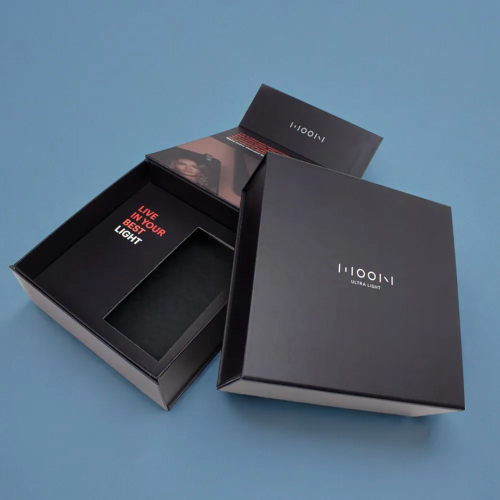
- Structural Rigid Boxes for Premium Handovers: Rigid boxes are constructed from heavy-gauge industrial chipboard or dense greyboard (ranging from 1,200 GSM to 2,400 GSM) that completely eliminates flex. The lid closes with a clean, satisfying friction fit, maintaining its structural integrity through repeated handling, shelf storage, and postal transit. For client-facing photography work, wedding print packages, portrait deliveries, and fine art collections, rigid construction represents the professional benchmark. Our range of luxury rigid boxes offers tailored board weights and high-end exterior finishes designed specifically for studio presentation.
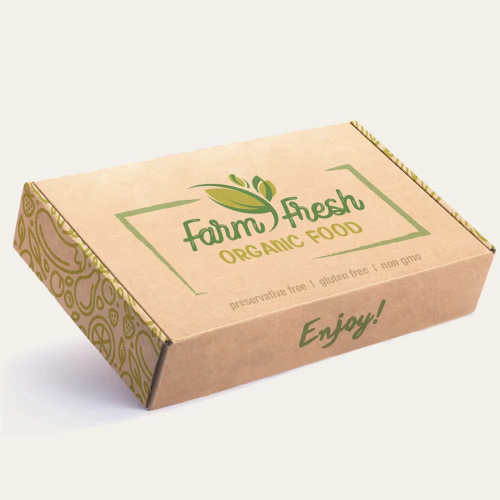
- Folding Cardboard for High-Volume Dispatch: Cardboard formats—including folding boxboard (FBB), Solid Bleached Sulfate (SBS), and corrugated stocks—are lightweight, cost-effective workhorses for high-volume dispatch. Specifying dense, high-caliper board grades (350 to 450 GSM or fine E-flute corrugated) ensures these cartons retain structural compression strength during courier delivery without inflating volumetric freight charges. Explore our retail packaging line for options tailored to high-density ecommerce print shipping.
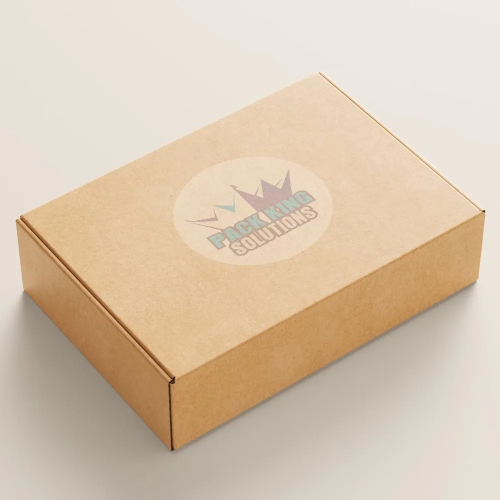
- Natural Kraft for Eco-Conscious & Artisan Branding: Unbleached Kraft board features an uncoated, tactile surface that communicates an authentic, sustainable brand identity. Kraft boxes print effortlessly with minimal, typographic graphics or crisp foil stamps. However, because standard industrial Kraft can retain residual acids, always specify certified acid-free Kraft board when engineering boxes for long-term photographic preservation.
- Archival Mylar Barriers for Maximum Environmental Isolation: Mylar-lined boxes or polyester barrier sleeves introduce absolute moisture isolation that standard paperboard cannot match. While standard cardstock remains permeable to fluctuating room humidity over decades, Mylar creates an impenetrable barrier against environmental moisture and gases. This material specification is essential for institutional archives, museum collections, and historic preservation projects.
Box Structural Styles & Opening Mechanics
The structural format dictates how the packaging performs during warehouse assembly, shipping transit, and client presentation:
- Lid and Base (Two-Piece Cartons): The classic two-piece design allows prints to lie completely flat while offering effortless top-down visual access without disturbing the contents.
- Clamshell & Flip-Top Boxes: Featuring a hinged lid that opens like a book while remaining attached to the base tray, preventing lid loss in busy studio or archive settings.
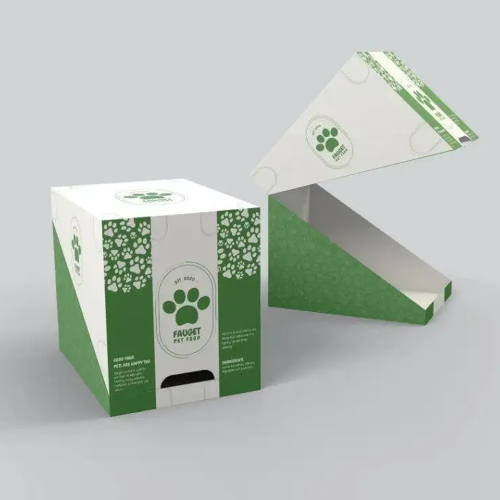
- Flat-Pack Assembly Boxes: Arrive flat-folded to optimize warehouse storage footprint and assemble in seconds without adhesives, ideal for high-speed online retail dispatch.
- Drop-Front Archival Boxes: Engineered with a fold-down front panel that permits horizontal print extraction, preventing edge damage when handling stacked archival collections.
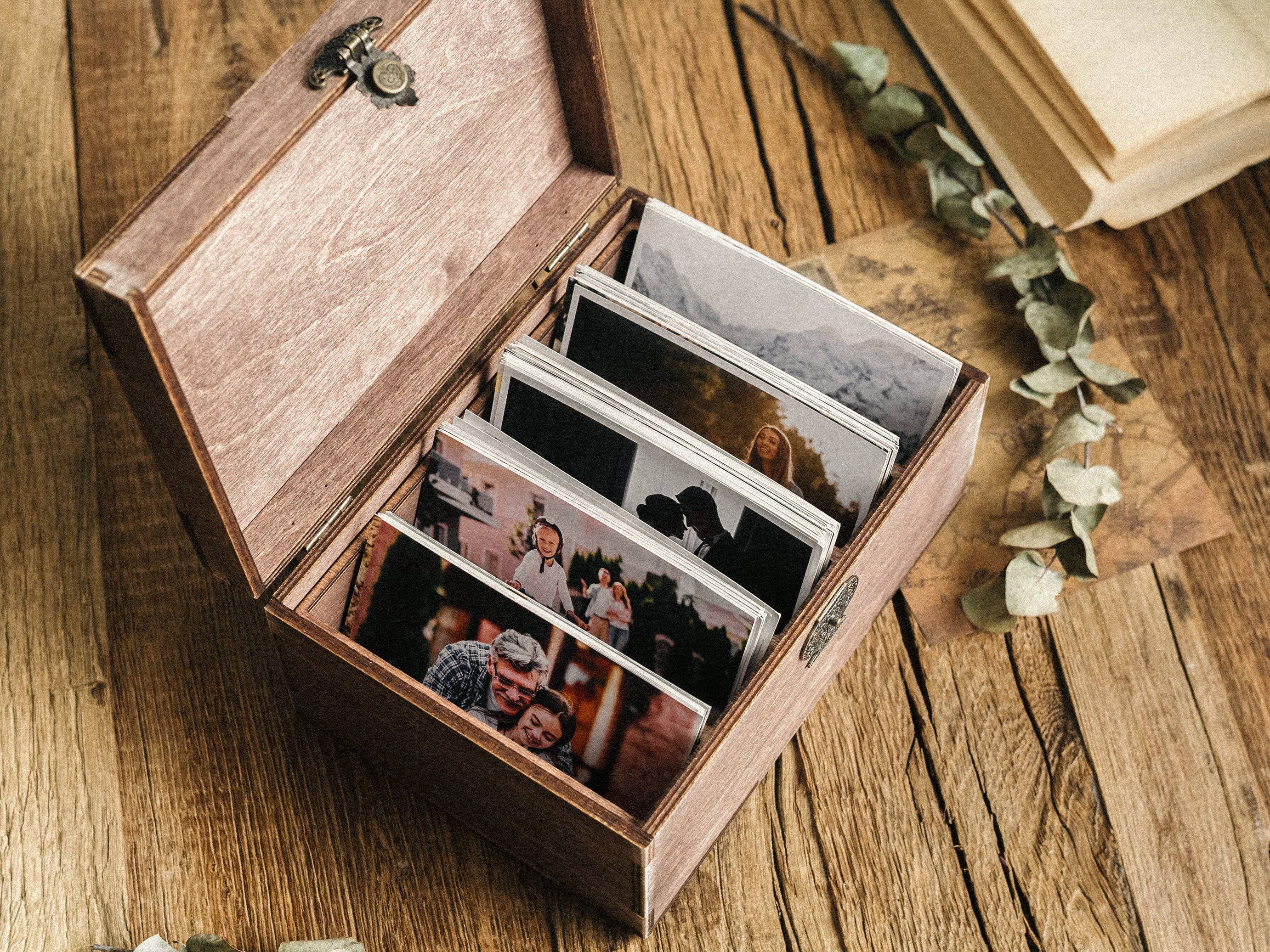
Print Format vs. Internal Box Dimension Recommendations
Calculated internal clearance is critical. Oversized boxes allow prints to shift during shipping, causing corner damage, while overly tight dimensions make print extraction difficult and risk edge buckling. Allow 5–8 mm of internal tolerance on all sides to accommodate tissue interleaving or protective foam inserts.
| Print Format |
Standard Print Dimensions |
Recommended Internal Dimensions |
Target Application |
| 6 × 4 inch |
152 × 102 mm |
16 × 11 × 5 cm |
Standard snapshot & proof prints (up to 150 prints) |
| 7 × 5 inch |
178 × 127 mm |
19 × 14 × 5 cm |
Standard portrait packages (up to 150 prints) |
| 10 × 8 inch |
254 × 203 mm |
27 × 22 × 6 cm |
Studio portrait & commercial prints (50–100 prints) |
| 12 × 10 inch |
305 × 254 mm |
32 × 27 × 7 cm |
Large-format studio presentation (50–100 prints) |
| A4 (210 × 297 mm) |
297 × 210 mm |
32 × 22 × 6 cm |
Fine art documents & portfolio prints (up to 100 prints) |
| A3 (297 × 420 mm) |
420 × 297 mm |
44 × 32 × 7 cm |
Exhibition-grade fine art prints (25–50 prints) |
For custom non-standard print formats or mounted boards, ordering fully custom packaging allows you to specify exact dielines without incurring additional tooling costs.
Exterior Surface Finishes & Aesthetic Branding
Exterior tactile and visual finishes elevate plain storage boxes into memorable brand assets that drive client referrals and unboxing engagement.
| Finish Option |
Visual & Tactile Characteristics |
Recommended Application |
| Soft-Touch Coating |
Velvety, glare-free matte texture with fingerprint resistance |
High-end wedding & portrait studio deliveries |
| Matte Lamination |
Clean, non-reflective, modern aesthetic surface |
Minimalist & contemporary photo studio branding |
| Hot Foil Stamping |
Metallic gold, silver, or rose-gold typographic foil detail |
Luxury monograms, studio logos, & crests |
| Blind Debossing |
Recessed 3D pressed structural detail without ink |
Classic heritage brands & understated studio signatures |
| Spot Gloss UV |
Targeted high-gloss pattern contrast on a matte background |
Editorial, commercial, & fashion print packaging |
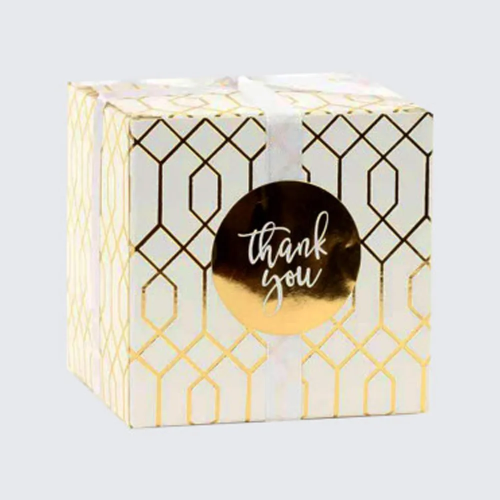
The emotional impact of physical presentation plays a pivotal role in client satisfaction. In an era dominated by digital media, tactile presentation acts as a physical anchor for your photography work. When a client unboxes their prints, a custom presentation box featuring soft-touch textures or metallic hot foil stamping elevates perceived value, turns clients into vocal brand advocates, and directly enhances brand recall over time.
Step-by-Step Archival & Print Handling Protocols
To maximize the preservation lifespan of fine art prints inside storage boxes, professional archivists adhere to structured handling and conservation protocols:
- Use Certified Acid-Free Interleaving Sheets: Always insert a sheet of 100% cotton rag or acid-free glassine paper between every individual print. This prevents direct emulsion-to-emulsion contact, stopping ink transfer and friction scratches.
- Control Relative Humidity & Temperature: Store photograph storage boxes in climate-controlled spaces where relative humidity remains consistently between 30% and 50%, with ambient temperatures under 20°C. Never keep archival boxes in uninsulated lofts or damp basements.
- Wear Lint-Free Cotton Handling Gloves: Natural oils and perspiration on human skin leave behind acidic residues that permanently cause yellowing and fingerprint marks on sensitive paper over time. Always handle unmounted prints by their edges using clean cotton gloves.
- Avoid Harmful Tapes and Adhesives: Standard sticky tapes, synthetic rubber bands, and unbuffered adhesives break down into sticky, acidic compounds that bleed through paper stock and ruin prints permanently.
- Observe Safe Stacking Heights: Do not overfill storage boxes. Limit print stacks to a maximum of 100 to 150 prints per container to prevent excess gravitational weight from compressing bottom layers.
Commercial Applications & Industry Use Cases
- Wedding & Portrait Photographers: Use custom photograph storage boxes as an essential physical touchpoint. A branded rigid box serves as a permanent keepsake that clients display in their homes.
- Fine Art Galleries & Print Studios: Require museum-grade, acid-free rigid boxes lined with tissue paper to preserve limited-edition prints and justify premium pricing.
- E-Commerce Print Retailers: Depend on structural folding boxes engineered to withstand carrier handling while delivering a clean, unboxing experience for online shoppers.
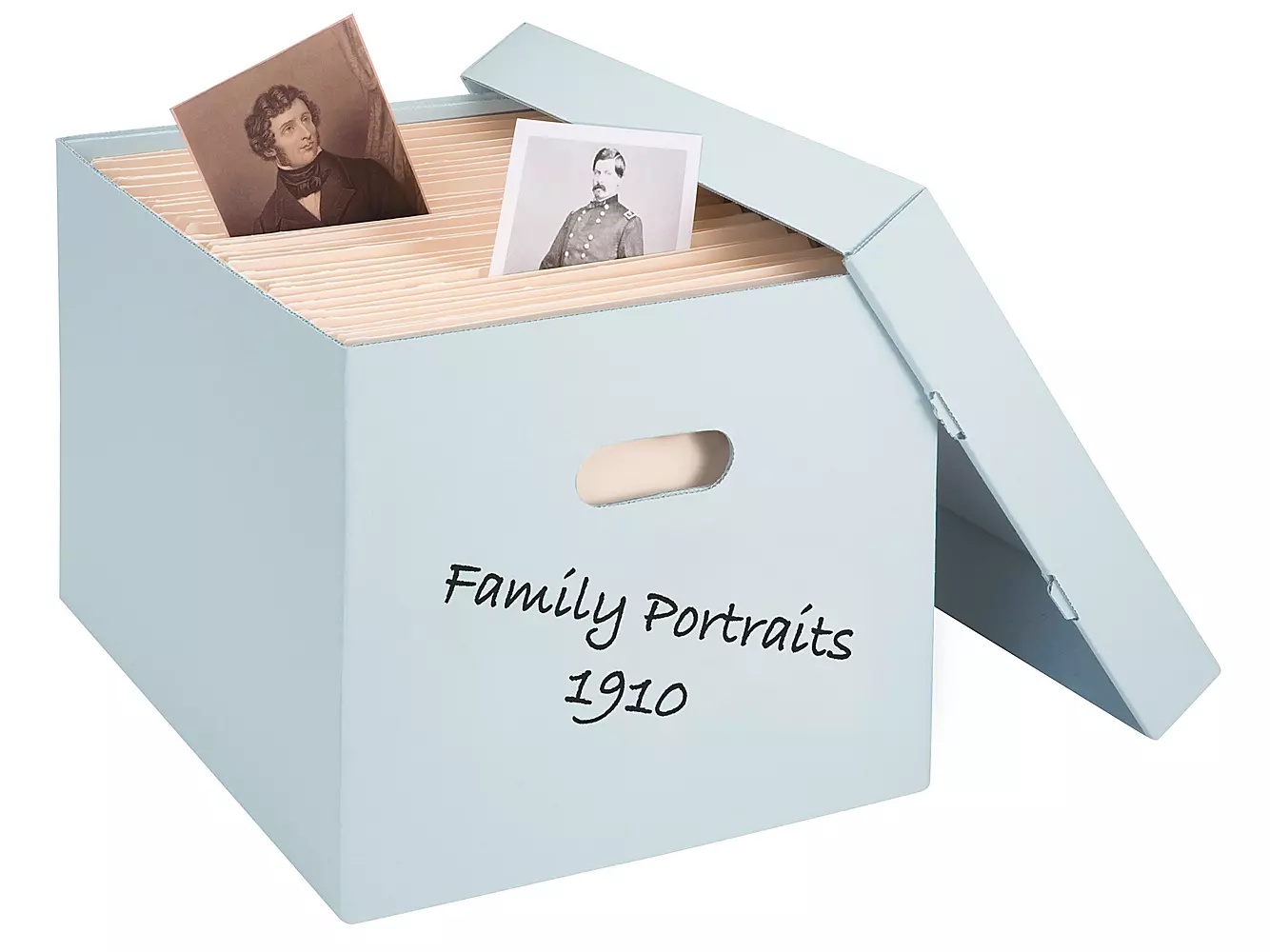
- Personal Collectors & Family Archivists: Rely on acid-free cardstock and precise lid fits to safeguard historical family photographs from moisture, dust, and yellowing over 30+ years.
- Institutional Archives & Design Libraries: Use drop-front and clamshell preservation boxes to index historic print collections and allow damage-free access for researchers.
5 Pre-Procurement Questions for Custom Photo Boxes
Before committing your order to production, review these key operational variables:
- What is the maximum trim size of your print stack? Always base dimensions on actual measured print sizes plus 5–8 mm clearance.
- How many prints will be housed per box? Determine internal depth based on maximum stack height, including interleaving sheets.
- Will the box be dispatched via courier networks? Courier shipping requires higher ECT-rated corrugated boards or structural rigid boxes to resist transit crushing.
- What is the required archival lifespan? Long-term preservation demands certified acid-free and lignin-free paperboard grades for presentation packaging.
- How will your logo be rendered? Match your chosen surface finish (e.g., soft-touch laminate) with appropriate print methods like foil stamping or blind debossing.
Engineered Photo Packaging Solutions by Custom Packaging Pro UK
Custom Packaging Pro UK manufactures bespoke photograph storage boxes engineered to your exact dimensional and material specifications. Every box is produced to order—allowing you total control over material grade, board caliper, internal clearance, and exterior finishing options without restriction.
Enjoy zero minimum order requirements, fast 6–8 working day production turnarounds from artwork approval, and free UK delivery on all commercial orders. Contact our packaging design specialists today to request a custom quote and elevate your print presentation.
Frequently Asked Questions
- Which paperboard grade is mandatory for long-term photographic preservation?
Always specify 100% acid-free and lignin-free board with a pH level above 7.5 to prevent chemical off-gassing and paper yellowing over time.
- Can photo storage boxes be manufactured to custom dimensions?
Yes, custom boxes can be engineered to your exact length, width, and depth specifications to ensure ideal internal clearance.
- Are standard Kraft packaging boxes archival-safe?
Standard Kraft is not naturally acid-free due to residual raw wood lignins. You must explicitly request certified acid-free Kraft board for long-term archival projects.
- What exterior finish delivers the highest perceived value for photography studios?
A soft-touch matte lamination combined with a hot foil-stamped logo provides an exceptionally luxury tactile feel and high visual contrast.
- How do I prevent photographic prints from sliding and incurring damage in transit?
Specify snug internal dimensions with 5–8 mm clearance and incorporate tissue paper interleaving or custom internal foam pads to lock prints in place.
- What is the primary structural difference between rigid boxes and folding cardboard boxes?
Rigid boxes utilize thick, solid greyboard (1.5mm to 3.0mm) that does not collapse, providing maximum luxury and strength. Folding cardboard boxes arrive flat-packed, offering an economical solution for volume shipping.
- How many prints should ideally be stored inside a single box?
It is recommended to store a maximum of 100 to 150 prints per box to prevent heavy gravitational compression on lower prints in the stack.
- Why is tissue or glassine interleaving required between stacked prints?
Interleaving sheets create a smooth buffer that stops direct emulsion-to-emulsion rubbing, eliminating surface micro-scratches and ink transfer during vibration.
- What production lead times apply for custom packaging orders?
Standard custom manufacturing takes between 6 to 8 working days following final artwork sign-off, inclusive of free UK delivery.
- Are there minimum order quantity restrictions for custom orders?
No, Custom Packaging Pro UK operates with zero minimum order quantities, allowing you to order small prototype batches or large commercial volumes seamlessly.
Safeguard your print collections and elevate your client presentation with custom engineered solutions from Custom Packaging Pro UK. Contact our design experts today to begin your order.