Packaging Waste Regulations UK: A Complete Guide for Businesses in 2026
July 23, 2026
If you run a business that makes, fills, imports, or sells packaged goods in the UK, chances are you've heard "packaging compliance" mentioned a lot more this year. There's a reason for that. Packaging waste regulations UK authorities enforce have shifted quite a bit lately, and honestly, they're still shifting. Sell as many as a box of biscuits, and these rules will probably find you somehow.
This guide walks through what the regulations actually ask of you, who needs to care, and how not to get caught out. Firms like Custom Packaging Pro UK field these questions from clients constantly, so what follows is really just the stuff people keep asking about.
What Are Packaging Waste Regulations UK Businesses Must Follow?
Put simply, the packaging waste regulations UK lawmakers have introduced a bill to move the cost of packaging waste off councils and taxpayers and onto whoever's actually producing or using the packaging. The UK has had some form of producer responsibility since the late 1990s. For years, though, that system only covered a small slice of the real recycling bill. The newer reforms, built on the Environment Act 2021, are an attempt to close that gap properly.
What does this mean in practice? More paperwork, mostly, and a lot more precision than businesses were used to. You now need to track how much packaging you put on the market. broken down by material and type, and report it on a schedule. Get the numbers wrong, and you're not just looking at an awkward phone call; there are real fines attached.
Provisional Defra figures for 2024 put UK packaging waste at roughly 12,727,000 tonnes, with 8,154,000 tonnes of that recycled. Paper and cardboard are pulling their weight, at a 74.3% recycling rate, with metal close behind at 68.4% and glass at 65.7%. Understanding why sustainable packaging matters helps businesses align with these recycling targets, especially since plastic is still the laggard—which is more or less why it ended up with its own tax.
Extended Producer Responsibility (EPR)
Extended Producer Responsibility (EPR) is, without much competition, the biggest shake-up in UK packaging law in years. The updated scheme, known as pEPR, started on 1 January 2025 and is run by PackUK, a body sitting inside Defra. The logic behind it isn't complicated: whoever puts packaging on the market should pay for what happens to it afterward, rather than leaving councils and taxpayers to cover most of the bill.
Fees are worked out per tonne of material, and they're not small. In the scheme's first year, businesses paid flat base fees, £423 a tonne for plastic and £192 a tonne for glass. From year two onward, that shifts to an eco-modulated model using a red-amber-green rating, so genuinely recyclable packaging costs less than the stuff that isn't. EPR is expected to raise over £1 billion a year for household recycling collections. If your business falls within scope, you'll need to register with the right regulator and keep records solid enough to survive scrutiny.
Producer Responsibility Obligations and Essential Requirements
The Producer Responsibility Obligations (Packaging Waste) Regulations are an important part of the UK's packaging laws. They work alongside Extended Producer Responsibility (EPR) and help businesses take responsibility for the packaging they place on the market.
Businesses may be required by these regulations to report the amount of packaging they use, gather packaging data, and support recycling initiatives. In recent years, the rules have been updated to make reporting more accurate and to ensure more businesses share responsibility for managing packaging waste.
Another important law is the Packaging (Essential Requirements) Regulations. These focus on how packaging is designed rather than how it is reported. The aim is to reduce unnecessary waste before packaging even reaches customers.
Businesses are encouraged to:
- Use only the amount of packaging needed to protect the product.
- Choose materials that can be reused or recycled where possible.
- Avoid using harmful substances that could affect people or the environment.
Following these requirements helps businesses reduce waste, lower material costs, and create more sustainable packaging.
Plastic Packaging Tax (PPT)
The Plastic Packaging Tax (PPT) was introduced in April 2022 to encourage businesses to use more recycled plastic in their packaging. The tax applies to plastic packaging that contains less than 30% recycled plastic. If a business manufactures or imports enough plastic packaging to meet the UK registration threshold, it must register with HM Revenue & Customs (HMRC). Even if no tax is due, registration may still be required depending on the business's activities.
The tax rate is reviewed regularly and can change over time. Because of this, businesses should check the latest government guidance to make sure they are following the current rules. Using more recycled plastic not only helps businesses reduce their tax costs but also supports the UK's goal of cutting plastic waste and protecting the environment. Many companies are now redesigning their packaging to include recycled materials and reduce their overall environmental impact.
Major UK Packaging Laws at a Glance
| Law / Regulation |
Purpose |
Who It Applies To |
| Producer Responsibility Obligations (Packaging Waste) Regulations |
Sets recycling targets and evidence requirements (PRNs/PERNs) |
Manufacturers, packers/fillers, sellers above size thresholds |
| Packaging (Essential Requirements) Regulations |
Sets design standards for weight, volume, and harmful substances |
Anyone placing packaging on the UK market |
| Extended Producer Responsibility (pEPR) |
Shifts the full cost of household packaging waste onto producers |
Large and small producers, brand owners, importers, marketplaces |
| Plastic Packaging Tax (PPT) |
Taxes plastic packaging with under 30% recycled content |
Manufacturers/importers of 10+ tonnes yearly |
| UK Deposit Return Scheme (from 2027) |
Adds refundable deposits to single-use drink containers |
Drinks producers, retailers, and hospitality businesses |
Which Businesses Must Comply, and What Counts as Packaging
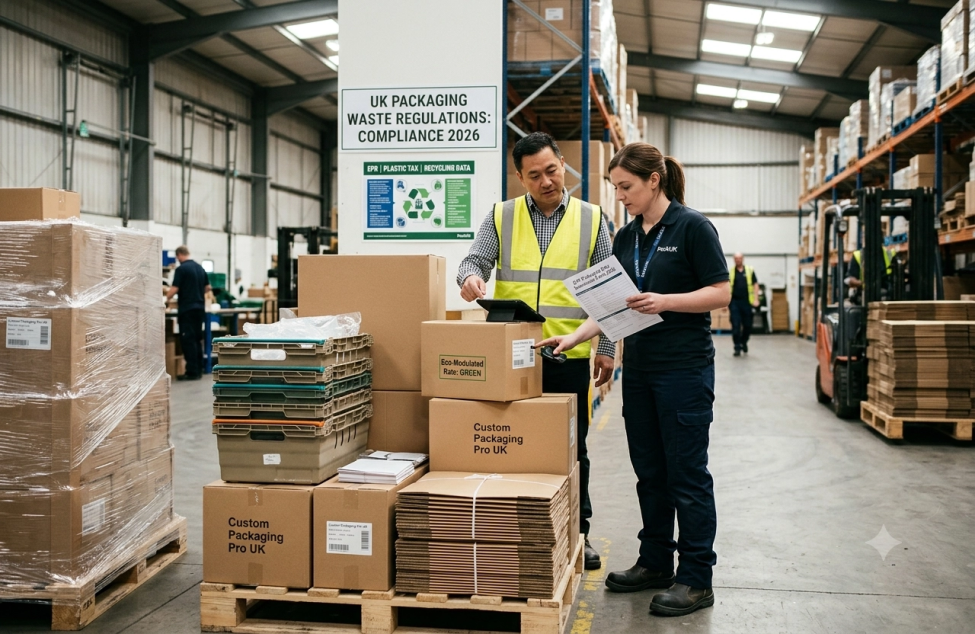
Plenty of people assume this only bothers big manufacturers. It doesn't. Importers, wholesalers, distributors, retailers, and online sellers, they can all end up on the hook, right alongside the manufacturers you'd expect. Even a retailer that just repackages or rebrands a product can count as a producer under EPR so long as they're the first UK business handing that packaging to the end customer.
There are thresholds, so the smallest businesses aren't crushed: smaller producers mostly just report data, while larger ones, judged on turnover and packaging tonnage, carry the full weight of fees and recycling evidence.
The rules trail packaging the whole way from the factory floor to the customer's hands. Primary packaging is whatever touches the product directly, a shampoo bottle, say. Secondary packaging bundles those together, like the box holding a dozen bottles, and tertiary packaging covers pallets and crates for shifting things in bulk. Shipping, packaging, and transit packaging deal with safe transport using sturdy custom shipping boxes, while retail packaging is what the customer actually sees on the shelf. eCommerce packaging has carved out its own space, too, padded mailers and bubble wrap included.
Responsibilities, Reduction, and Staying Compliant
Staying compliant touches several parts of a business, not just one department. Data collection is where it all starts: clean, checkable records of what packaging goes to market, reported twice yearly or annually, depending on size, solid enough to survive a look from the Environment Agency or its devolved counterparts. Design decisions matter here too, since the materials you pick feed straight into your EPR fees and PPT bill.
Because costs closely track material choice, reducing packaging has become a cost-saving measure rather than just an eco-friendly gesture. Lightweighting, trimming void fill, and using single-material sustainable packaging all lower the fee exposure. Recyclable packaging from one material, especially paper and cardboard, performs best in the UK's recycling system. Plastic recycling has improved, rising from 25.2% in 2012 to 51% in 2024, but about half of all plastic packaging still remains unrecycled.
Most businesses that trip up on UK packaging regulations aren't doing it deliberately. They're usually just underestimating how much coordination it takes across teams or assuming packaging bought from a supplier isn't their problem to worry about. It usually is, though. Responsibility tends to sit with whoever first supplies that packaging to a UK customer, regardless of where it was made. This is exactly where a decent packaging partner earns its keep.
Custom Packaging Pro UK, for instance, regularly helps clients figure out which rules actually apply to their packaging mix before an audit forces the question.
Penalties and Risks of Non-Compliance
Ignoring the packaging laws UK regulators enforce isn't something to shrug off. Miss a registration deadline, submit dodgy data, or pay EPR fees and PPT late, and penalties and interest follow, sometimes backdated to when payment was originally due. There's a reputational cost too. Bigger retail customers are increasingly asking suppliers to prove they're compliant before a contract even gets signed.
Packaging Waste Regulations UK and Business Compliance
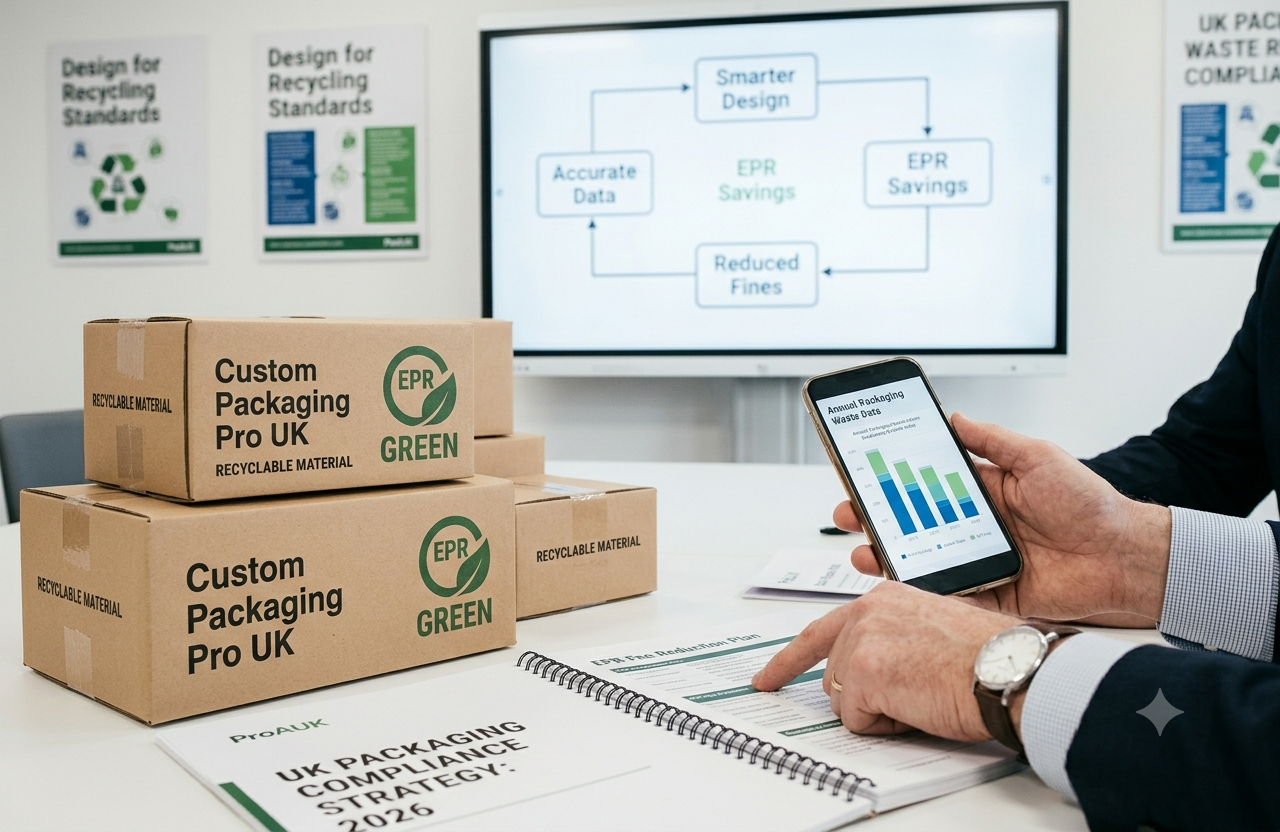
Packaging compliance in the UK has come a long way since the late 1990s. Today's regulations require businesses to do more than simply meet minimum standards. They need accurate packaging data, smarter material choices, and packaging designs that support recycling and waste reduction. Companies that take a proactive approach to compliance often reduce costs, improve efficiency, and strengthen customer trust.
Choosing reliable suppliers of custom packaging boxes UK can also make it easier to meet changing legal requirements while maintaining high-quality packaging. Custom Packaging Pro UK helps businesses develop packaging solutions that support compliance while protecting products and promoting sustainability. By using well-designed, eco-friendly custom packaging, businesses can meet legal obligations and create a better experience for their customers at the same time.
Frequently Asked Questions
- What are the packaging waste regulations UK businesses need to follow?
Mostly the Producer Responsibility Obligations, the Essential Requirements Regulations, the Extended Producer Responsibility, and the Plastic Packaging Tax.
- Who has to comply with UK packaging regulations?
Manufacturers, importers, distributors, wholesalers, retailers, and online sellers, depending on turnover and the amount of packaging they move.
- What is Extended Producer Responsibility (EPR) in simple terms?
Businesses that put packaging on the market pay for dealing with it once it becomes waste, rather than leaving that cost to councils and taxpayers.
- How much is the Plastic Packaging Tax?
£228.82 per tonne from 1 April 2026, for plastic packaging under 30% recycled content, once you cross 10 tonnes a year.
- What happens if a business doesn't comply?
Fines, backdated interest, closer regulatory attention, and lost trust with retail customers who now expect proof upfront.