Desiccant Packaging: Custom Packaging for Moisture-Sensitive Products in the UK
September 28, 2026
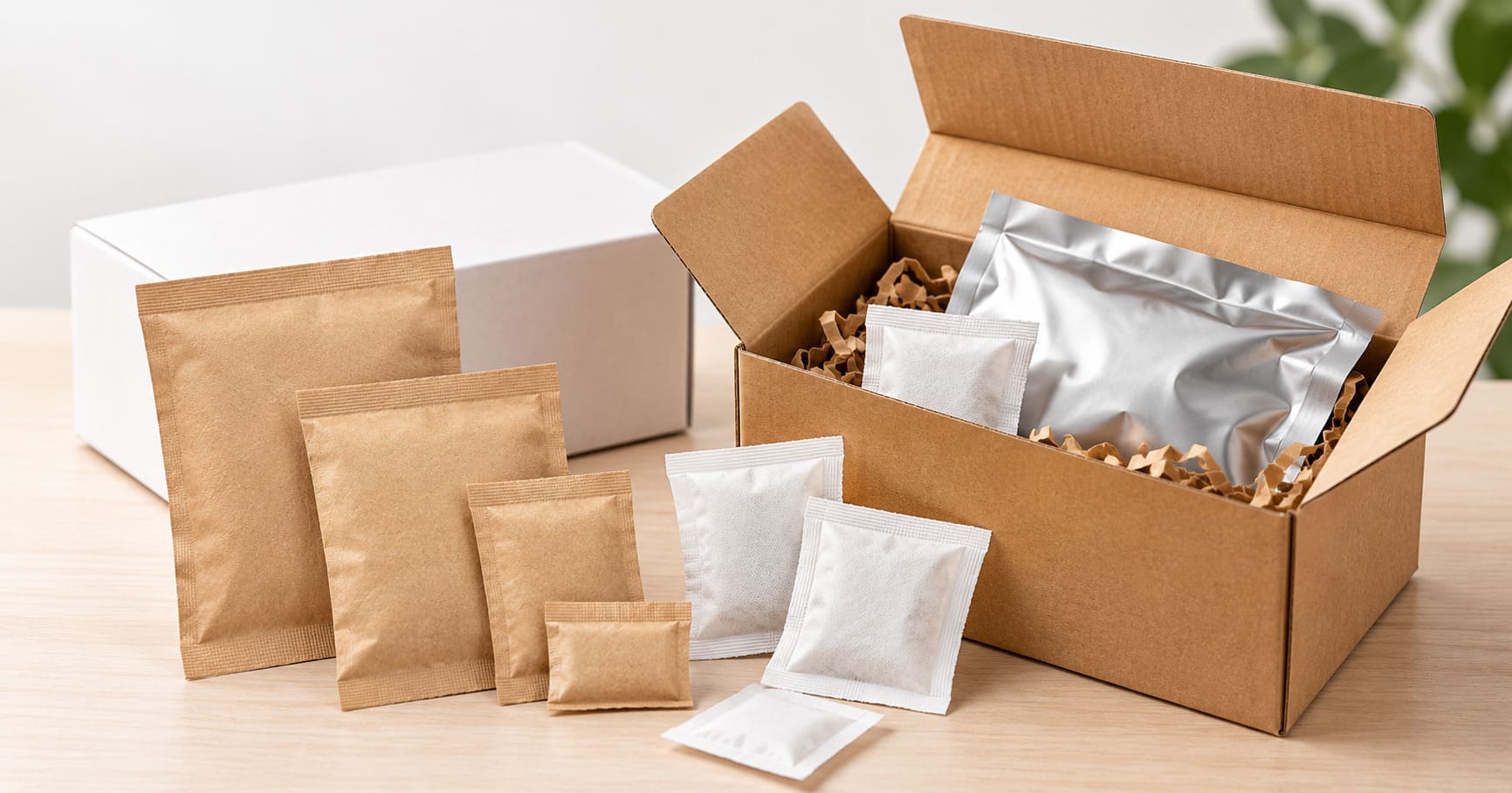
Moisture-sensitive products need more than a desiccant sachet dropped inside a box. The packaging around the product also matters, particularly in specialized fields like pharma packaging.
A desiccant such as silica gel, activated clay or molecular sieve is used to adsorb moisture within an enclosed packaging environment. The effectiveness of the overall solution can depend on factors such as the package material, internal volume, sealing method, surrounding humidity, temperature and required protection period.
For UK businesses already using desiccants, desiccant packaging therefore means thinking about the complete pack: the product, the selected desiccant, the enclosure around them and how everything will be stored or transported.
Custom Packaging Pro provides custom packaging for products that use or require desiccants. We do not supply the desiccant itself. Instead, businesses can source the appropriate desiccant separately and work with us on packaging designed around their product dimensions, presentation, storage and shipping requirements.
Guide to Custom Desiccant Packaging Solutions & Best Practices
What Is Desiccant Packaging?
Desiccant packaging is a packaging arrangement in which a moisture-adsorbing material is placed within an enclosed pack to help manage water vapour around a moisture-sensitive product.
Silica gel is probably the most familiar example, but it is not the only desiccant used in packaging. Other options include activated clay and molecular sieves. The appropriate choice depends on the application and environmental conditions.
ASTM's current D8629-26 standard guide describes desiccants as materials placed within packaging to provide defined humidity control and protect product integrity. This is an important distinction because the desiccant operates within a packaging system, rather than functioning independently of the enclosure.
A typical system may involve:
- the product being protected
- a suitable desiccant sachet or bag
- primary or inner packaging
- a pouch, bag or other enclosure where required
- an outer carton or shipping box
- inserts or compartments where required
- an appropriate closure or seal
The exact configuration depends on the product.
Why Does the Packaging Around a Desiccant Matter?
A desiccant adsorbs moisture from its surrounding environment. If the package continually allows significant amounts of water vapour to enter, the desiccant has more moisture to deal with.
This is why moisture protection should be approached as a packaging-system problem.
Water Vapour Transmission Rate, usually abbreviated to WVTR, is one of the technical concepts relevant to barrier packaging. It describes the passage of water vapour through a material or package under specified test conditions.
For example, ASTM has dedicated test methods for measuring the water vapour transmission of materials, while pharmaceutical packaging standards also use moisture-vapour transmission testing to assess packaging systems.
The practical lesson for a packaging buyer is straightforward: the desiccant and the packaging around it should be considered together.
A specialist selecting a desiccant may consider:
- what product requires protection
- internal package volume
- outer and inner packaging materials
- available space
- how the package is sealed
- required level of moisture protection
- ambient temperature and humidity
- anticipated storage or transit period
- expected moisture ingress or leakage
The required amount and type of desiccant should therefore be determined by the desiccant manufacturer, supplier or an appropriately qualified specialist for the specific application. Custom Packaging Pro can then focus on the part we provide: custom packaging built around your product and specified desiccant requirements.
Common Desiccants Used in Packaging
Businesses searching for desiccant packaging will encounter several materials. Understanding the basic terminology can make conversations with both your desiccant supplier and packaging supplier easier, especially when choosing the right enclosure for sensitive goods or specialized medicine packaging.
| Desiccant type |
What buyers should know |
| Silica gel |
A widely recognised adsorbent used in sachets and other moisture-control applications |
| Activated clay |
A mineral-based desiccant used in various commercial and industrial packaging applications |
| Molecular sieve |
A synthetic adsorbent used where particular moisture-control performance is required |
| Calcium chloride |
A highly hygroscopic material often associated with larger moisture-control applications, including cargo and container applications |
These materials should not be treated as interchangeable. The appropriate desiccant depends on the product, package, environmental conditions and required performance. A packaging supplier should not guess how many grams of silica gel or how many desiccant bags your product requires when that specification has not been professionally established.
What Does Adsorption Mean?
The distinction between adsorption and absorption is useful here.
Many desiccants work primarily through adsorption, where water molecules are attracted to and held on the internal and external surfaces of the desiccant material.
This is why reputable technical literature frequently describes silica gel and similar desiccants as moisture adsorbents.
What Products Commonly Need Packaging With Desiccants?
Desiccants are used across a broad range of industries because excess moisture can create very different problems depending on the product.
UK desiccant suppliers currently identify applications across electronics, optics, pharmaceuticals, manufacturing, transport and packaging, among others.
For Custom Packaging Pro customers, several sectors are particularly relevant.
Electronics and Electrical Components
Electronics are an obvious example of moisture-sensitive goods.
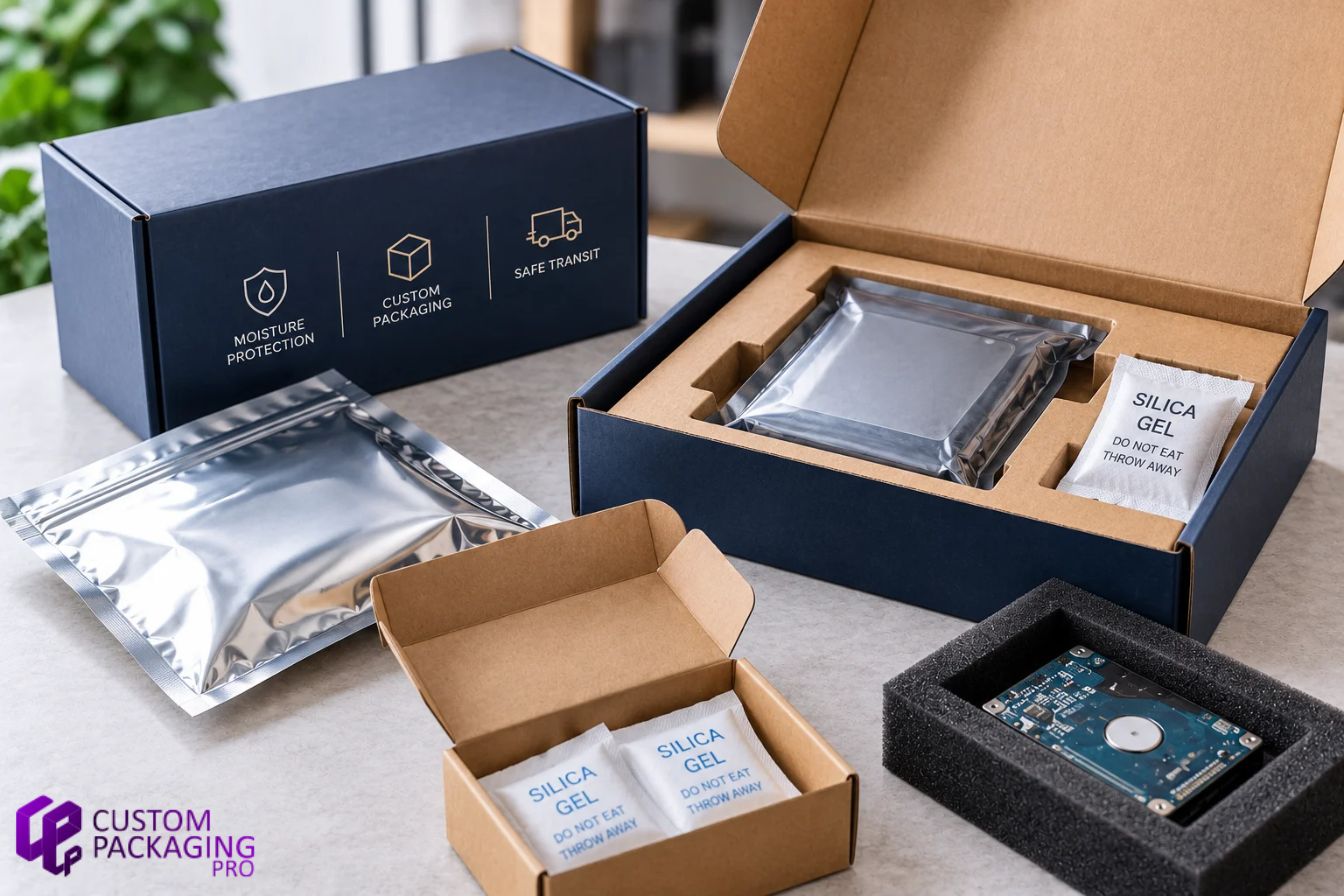
Electronic components may need protection against humidity and condensation during storage or transportation. For certain highly moisture-sensitive electronic devices, industry standards even define "dry pack" systems that combine desiccant material with a humidity indicator inside a sealed moisture-barrier bag.
Businesses packaging electronic products can pair their specified moisture-control solution with custom electronic packaging boxes.
Custom box dimensions can also help control product movement, while inserts or compartments can organise accessories and other components inside the pack.
Pharmaceutical and Healthcare Products
Moisture management is also relevant to pharmaceutical packaging, although requirements can be considerably more specialised.
Pharmaceutical packaging systems may be assessed for their resistance to water-vapour transmission, and the correct packaging specification depends on the medicine, dosage form, primary container and regulatory requirements.
Businesses requiring branded secondary cartons can consider our custom pharma packaging.
The desiccant specification and primary pharmaceutical packaging requirements should be determined by the appropriate pharmaceutical packaging, quality and regulatory specialists. A printed secondary carton should not be assumed to provide the same moisture barrier as a qualified primary container.
Industrial and Metal Components
Moisture can contribute to corrosion of susceptible metal products, making moisture management relevant for machinery parts, engineered components and other industrial goods during storage or transport.
For larger or heavier products, an outer corrugated shipping box can provide structural transit protection around the inner moisture-control system.
Here again, two different functions are involved.
The desiccant and moisture-barrier system manages humidity, while the corrugated outer package can provide physical protection, stacking strength and space for shipping information and branding.
Optical and Precision Equipment
Optical devices and precision components can also be sensitive to humidity, condensation and associated deterioration.
Specialist desiccant manufacturers list electronics and optics among established desiccant applications. The packaging for these products may therefore need to combine moisture management with protection against movement and physical impact.
Food and Dry Products
Desiccants are also found in some food packaging applications, but businesses need to be particularly careful here.
Packaging used for food in the UK must be suitable for its intended food-contact application and meet the applicable requirements. A business should not assume that a desiccant, sachet material or custom packaging material is automatically suitable for direct food contact.
If desiccant packaging for food is required, confirm the suitability of both the selected desiccant system and relevant packaging materials for the specific food application before production.
Which Packaging Formats Can Be Used Around Desiccant Systems?
There is no single package called a "desiccant box". Different products need different combinations of inner, barrier, retail and transit packaging.
The following options illustrate how a custom packaging supplier can fit into the wider moisture-control system.
Barrier-Style Bags and Pouches
Where moisture ingress is a major concern, the properties of the enclosing material become particularly important.
Flexible packaging can use multilayer structures to provide different barrier and mechanical properties. Custom Packaging Pro offers formats including Mylar ziplock bags, Mylar foil bags and aluminium bags.
The exact barrier performance should be confirmed for the material specification selected for your order. Terms such as "foil" or "Mylar" alone should not be treated as a substitute for a required WVTR or technical barrier specification.
Custom Printed Cartons
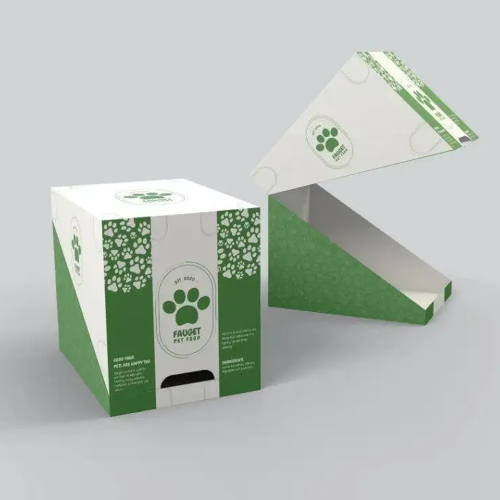
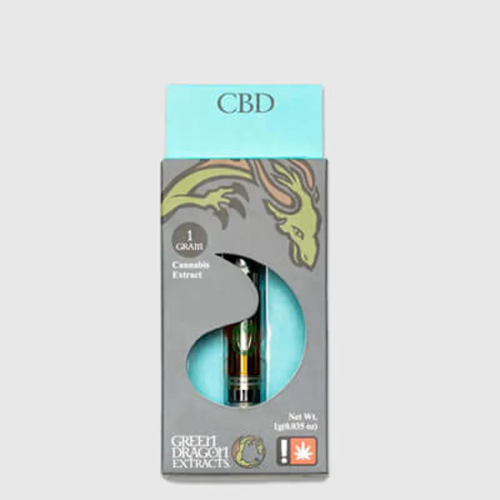
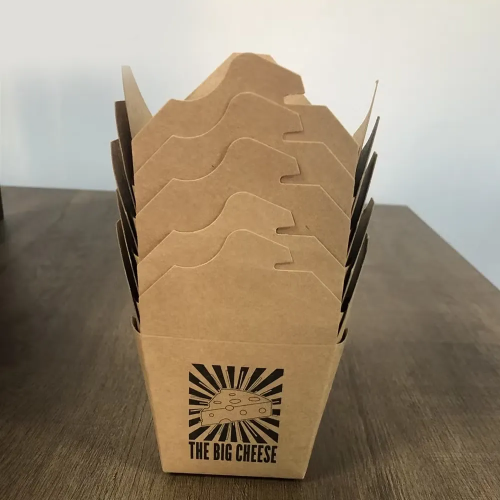
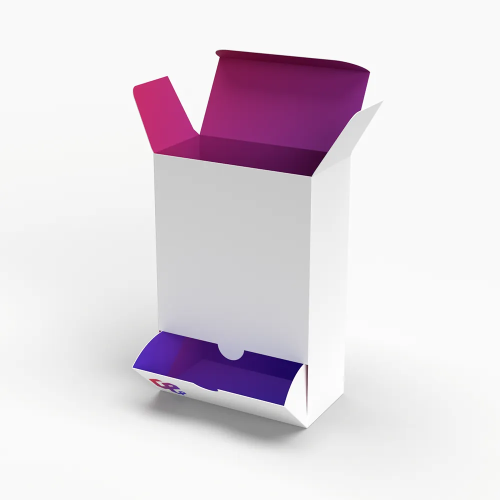
For retail presentation, secondary protection and product information, custom printed cartons can be designed around the dimensions of the primary packaged product.
A custom carton can provide space for:
- brand identity
- product information
- handling instructions
- batch or variable information where applicable
- inserts
- compartments
- protective internal structures
If the desiccant is contained inside a separate primary pack, the printed carton can then serve as the branded secondary packaging.
Corrugated Shipping Boxes
For distribution, warehousing and e-commerce fulfilment, corrugated packaging can add physical protection around the product's primary moisture-control packaging.
Custom sizing is valuable because excessive empty space can allow products to move during handling.
Our corrugated shipping packaging can be tailored around the dimensions and weight of the packed product.
Custom Inserts and Compartments
A loose desiccant sachet should not automatically be allowed to move around every package.
Depending on the product and approved packaging configuration, internal structures can help organise the contents.
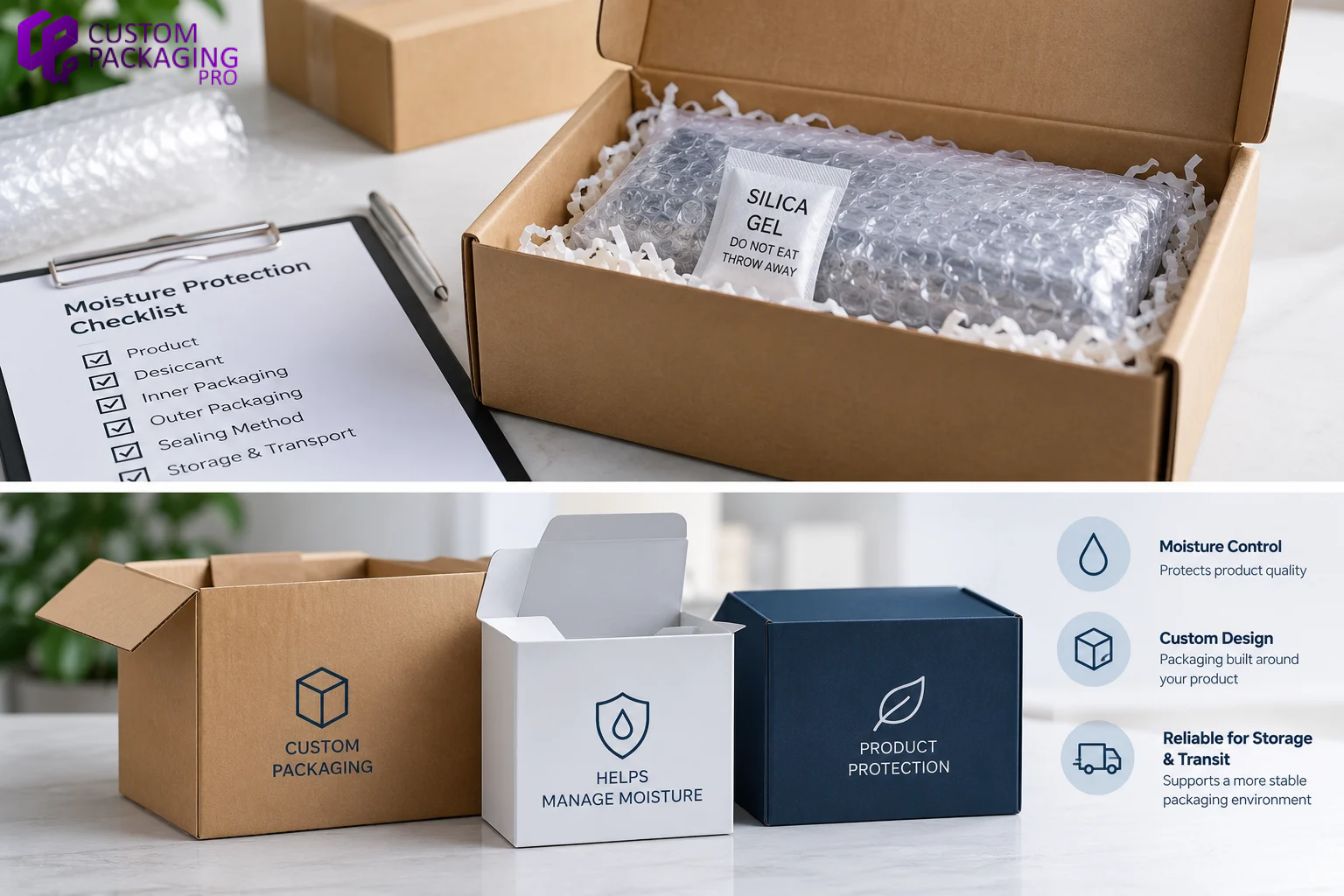
Custom box inserts can be designed to position products and accessories within a carton. If your packaging design requires dedicated space for a separately sourced desiccant sachet, provide its dimensions when discussing the structural design.
The final placement should follow the recommendations of your desiccant or product-packaging specialist so that the insert does not interfere with the required moisture-control performance.
How Much Desiccant Does Packaging Need?
There is no responsible universal answer such as "one silica gel packet per box".
The required quantity depends on the complete application.
Important variables can include package volume, packaging materials, moisture transmission, sealing, ambient humidity, temperature, storage duration and the required internal conditions.
This is also why different commercial desiccant suppliers publish different sizing guidance for particular products and applications.
For technically sensitive goods, do not choose a sachet size simply because another company uses it in a similarly sized box.
Instead:
- Define the product and moisture-protection requirement.
- Identify the complete packaging configuration.
- Have the appropriate specialist specify the type and quantity of desiccant.
- Provide those requirements to your custom packaging supplier.
- Design the outer or secondary packaging around the confirmed system.
Custom Packaging Pro can work from the dimensions and packaging requirements you provide, but the technical desiccant loading should come from your desiccant supplier or another suitably qualified specialist.
Desiccant Packaging for Storage vs Shipping
Storage and transportation can expose products to different conditions.
A product sitting in controlled indoor storage may face a different moisture profile from one moving through warehouses, vehicles, ports and international supply chains.
Long-distance shipments can also experience temperature and humidity changes. Moisture protection should therefore be specified against the expected real-world environment rather than the appearance of the final package alone.
Packaging for Storage
Consider:
- expected storage period
- warehouse conditions
- how frequently the package will be opened
- sensitivity of the product
- required barrier performance
- closure method
Packaging for Transit
Consider:
- journey length
- handling conditions
- destination climate
- physical shock and compression
- outer shipping protection
- whether the inner moisture barrier could be punctured or damaged
- required labelling and handling information
For export applications, businesses should also check packaging requirements for the destination market rather than assuming UK requirements are sufficient.
What Is Desiccant Foil Packaging?
Desiccant foil packaging generally refers to a system where a desiccant is used within a foil-based or high-barrier enclosure.
The important point is not simply the metallic appearance of the packaging. What matters technically is the barrier performance of the complete material structure and the quality of its closure or seal.
This combination can be relevant because the desiccant manages moisture already present or entering the enclosed space, while the barrier material is intended to restrict further moisture ingress.
Specialist barrier-packaging suppliers use this combined approach for moisture-sensitive products.
If you are sourcing custom foil-style packaging, provide your required barrier specification rather than relying only on a material name.
What About Desiccant Blister Packaging?
Pharmaceutical and healthcare buyers may encounter the term desiccant blister packaging.
Blister systems are specialised packaging formats, and moisture-barrier performance can be critical for moisture-sensitive medicines.
ASTM has specific methods for measuring water-vapour transmission rates of pharmaceutical bottles and blisters. This demonstrates why pharmaceutical packaging should be treated as a technical packaging system rather than simply adding a dry packet to an ordinary carton.
Custom Packaging Pro can provide relevant custom printed secondary pharma packaging, but any primary blister, desiccant and pharmaceutical barrier requirements need to meet the specifications and regulatory requirements applicable to the medicine.
How to Brief a Custom Packaging Supplier
If your desiccant requirements have already been established, giving the packaging supplier accurate information from the beginning can make development much easier.
Prepare the following details:
| Information |
Why it matters |
| Product dimensions |
Establishes the internal packaging size |
| Product weight |
Influences structural material requirements |
| Primary package dimensions |
Helps size secondary and transit packaging |
| Desiccant type |
Provides context for the packaging configuration |
| Desiccant sachet dimensions |
Helps when dedicated internal space is required |
| Required barrier specification |
Helps identify potentially suitable material structures |
| Storage conditions |
Provides context for material selection |
| Transit method |
Helps establish physical protection requirements |
| Quantity required |
Influences production planning |
| Printing requirements |
Determines artwork and print processes |
| Insert requirements |
Helps control positioning and movement |
| Regulatory requirements |
Particularly important for food, pharmaceutical and other controlled applications |
You do not necessarily need every technical answer before contacting a packaging supplier. However, specifications relating to desiccant performance, regulatory compliance or required barrier performance should not be guessed.
Choosing Packaging for a Product That Uses Desiccants
Rather than starting with the question, "Which box looks best?", work from the product outwards.
- Identify the moisture risk: Understand what excess moisture could do to the product. The concern might be corrosion, condensation, physical deterioration, loss of product quality or another application-specific issue.
- Establish the moisture-control requirement: Work with your desiccant supplier or relevant technical specialist to determine the appropriate desiccant type, amount and target packaging conditions.
- Determine the required barrier: Find out whether the application needs a specified moisture barrier and what technical performance is required.
- Design the package around the system: Once the technical requirements are established, the packaging can be sized around the product, inner enclosure, sachet and protective components.
- Add transit protection: Fragile or heavy products may require corrugated outer packaging, inserts, dividers or other protective features.
- Add branding and information: Printing, finishes and brand elements can then turn the technical package into a commercially ready solution.
This order matters. Moisture-sensitive packaging should begin with product protection requirements, not decoration.
Packaging Material and Sustainability Considerations for UK Businesses
Packaging performance is not the only consideration for UK businesses.
The UK's Extended Producer Responsibility for packaging framework places obligations on qualifying businesses that supply or import packaging or packaged goods. Depending on turnover, packaging tonnage and business activity, organisations may have registration, data-reporting, recycling or fee obligations.
This makes efficient packaging design increasingly relevant.
Reducing unnecessary material is useful, but lightweighting should not compromise the protection needed by the product. A damaged moisture-sensitive product and its replacement can create additional material, transport and commercial costs.
The objective should therefore be fit-for-purpose packaging with no unnecessary material, rather than simply using the least packaging possible.
Businesses should check their own EPR obligations because responsibilities depend on their circumstances.
Where to Buy Desiccant Packaging in the UK
This question has two possible meanings.
If you need silica gel sachets, desiccant bags, molecular sieves or other moisture-adsorbing materials, you need a specialist desiccant supplier. Custom Packaging Pro does not supply those materials.
If you already have, or are specifying, the desiccant and need custom packaging around the product, Custom Packaging Pro can help with the packaging component of the project.
Available formats include custom boxes, printed cartons, corrugated shipping packaging, inserts and flexible packaging options.
This separation can also be useful for procurement teams. Your technical or desiccant supplier establishes the moisture-control requirement, while your packaging specification can then be developed around the product and those requirements.
Custom Desiccant Packaging for UK Businesses
Custom Packaging Pro works with businesses that need packaging tailored to their products rather than relying on a standard box that happens to be close in size.
For products using desiccants, customisation can include:
- packaging made to your required dimensions
- custom printed branding
- corrugated shipping boxes
- retail cartons
- flexible bags and pouches
- custom inserts and compartments
- structural designs based on the packed product
- printing for product and handling information
- physical samples or mock-ups where applicable
Our role is to manufacture the custom packaging component of your moisture-protection system.
We do not select or supply silica gel, activated clay, molecular sieves or other desiccants. Where the application requires a specific WVTR, desiccant loading, food-contact status, pharmaceutical specification or another technical requirement, provide that information when requesting your packaging.
That allows the project to begin with a clearer specification and reduces the risk of treating moisture protection as an afterthought.
Request a Quote for Desiccant Packaging
Already know the desiccant requirements for your product?
Send Custom Packaging Pro your:
- product dimensions
- product weight
- required packaging quantity
- desiccant sachet dimensions, where relevant
- preferred box, pouch or packaging format
- insert or compartment requirements
- required barrier specification, if one has been established
- printing and branding requirements
- storage and shipping information
We can then discuss a custom packaging solution built around your product.
Need packaging for a moisture-sensitive product? Request a custom packaging quote.
Frequently Asked Questions
- What is desiccant packaging?
Desiccant packaging is a packaging arrangement that uses a moisture-adsorbing material inside an enclosed pack to help control humidity around a product. The complete solution can include a desiccant sachet, barrier or primary enclosure, outer carton, inserts and shipping packaging.
- What is the most common desiccant used in packaging?
Silica gel is one of the most widely recognised desiccants used in packaging. Activated clay and molecular sieves are also used. The appropriate material depends on the product, environmental conditions and required moisture-control performance.
- Does Custom Packaging Pro sell silica gel packets?
No. Custom Packaging Pro provides custom packaging services. Businesses requiring silica gel sachets, desiccant bags or other desiccant materials should source them from an appropriate specialist supplier.
- Can you make packaging with space for a desiccant sachet?
Custom packaging and inserts can be designed around supplied product and component dimensions. If your approved packaging configuration requires dedicated space for a desiccant sachet, provide the sachet dimensions and placement requirements when requesting the structural design.
- How much desiccant should I put in my packaging?
There is no universal amount suitable for every package. Desiccant requirements can depend on internal volume, packaging material, barrier performance, sealing, temperature, relative humidity, storage duration and the product's sensitivity. Obtain the technical specification from your desiccant supplier or an appropriately qualified specialist.
- Can desiccants be used in food packaging?
Desiccants are used in some food-packaging applications, but the materials and complete packaging configuration must be suitable for the intended application. UK government guidance requires packaging used for food to be suitable for food contact. Confirm the relevant requirements for your specific product before ordering.
- What is WVTR in packaging?
WVTR means Water Vapour Transmission Rate. It is a measure used to assess how water vapour passes through a material or packaging system under defined conditions. It is particularly relevant when specifying packaging for moisture-sensitive products.
- Is a cardboard box a moisture barrier?
Ordinary corrugated or paperboard packaging should not automatically be treated as a high-performance moisture barrier. It can provide structural, transit, presentation and secondary protection, while a separately specified inner barrier system may provide the required moisture protection.
- Can desiccant packaging be custom printed?
The outer or secondary packaging can be customised with branding, product information and other required print elements. Custom Packaging Pro offers printed packaging across multiple box, bag and pouch formats.
- Do I need special packaging for electronics that use desiccants?
It depends on the electronic product and its moisture sensitivity. Some moisture-sensitive electronic components use specialised dry-pack systems involving moisture-barrier bags, desiccants and humidity indicators. Obtain the relevant technical specification first, then design the secondary and shipping packaging around that system.